Didier

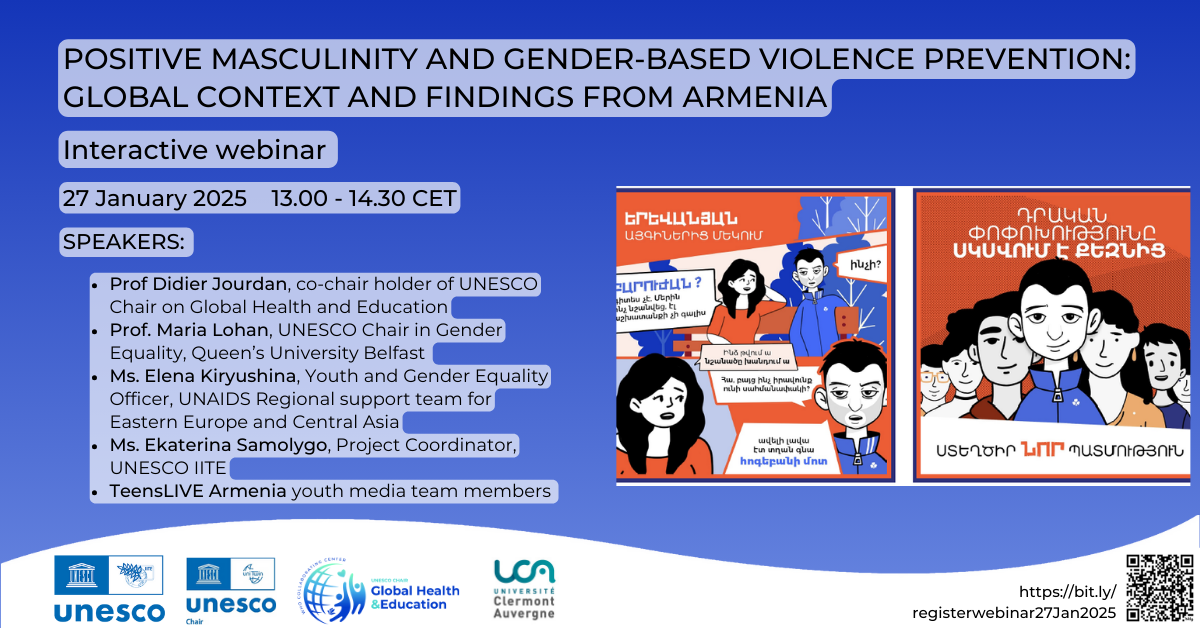
Webinar 27 January 2025 – Positive Masculinity and Gender-Based Violence Prevention: Global Context and Findings from Armenia

Webinar 27 January 2025 – Positive Masculinity and Gender-Based Violence Prevention: Global Context and Findings from Armenia

The persistence of harmful gender stereotypes and toxic masculinity is a significant global concern, contributing to various forms of gender-based violence and reinforcing unequal gender dynamics. The United Nations, UNESCO and UNAIDS have long recognized the importance of engaging men and boys in promoting gender equality. Through initiatives like the Joint Positive Masculinity Project, recently implemented in Armenia, these organizations aim to foster positive gender roles, encourage non-violent behaviour, and reduce harmful stereotypes worldwide. To effectively address these challenges, engaging young men and boys in reshaping societal norms is essential.

Under the UNESCO and UNAIDS Joint Positive Masculinity Project, a comprehensive social media campaign was launched in Armenia to engage young men aged 16-25 in a critical dialogue around masculinity, gender equality, and non-violence. This campaign was informed by a study of young men’s understanding of masculinity and aimed to challenge harmful masculinity stereotypes and promote positive behaviours by offering culturally relevant, interactive digital resources.

Speakers are:

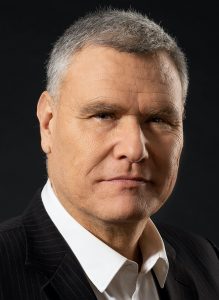
  • Professor Didier Jourdan, Chair holder of the UNESCO Chair and WHO Collaborating Centre on Global Health and Education
  • Professor Maria Lohan, UNESCO Chair in Gender Equality, Queen’s University Belfast
  • Elena Kiryushina, Youth and Gender Equality Officer, UNAIDS Regional support team for Eastern Europe and Central Asia
  • Armi Mkrtchyan,Project Coordinator and Gender Officer at UNESCO IITE’s TeensLIVE Armenia
  • Ekaterina Samolygo, Project Coordinator, UNESCO Institute for Information Technologies in Education (IITE)

The webinar is moderated by Goof Buijs, manager of the UNESCO Chair on Global Health and Education.

The webinar will take place on Monday 27 January 2025 from 13.00 – 14.30 CEST in English.

Register for the webinar today. The link to the webinar will be sent to you after registration.

More information.

Posted by Didier in News
UNESCO Chair at the 17th EPH Conference

UNESCO Chair at the 17th EPH Conference

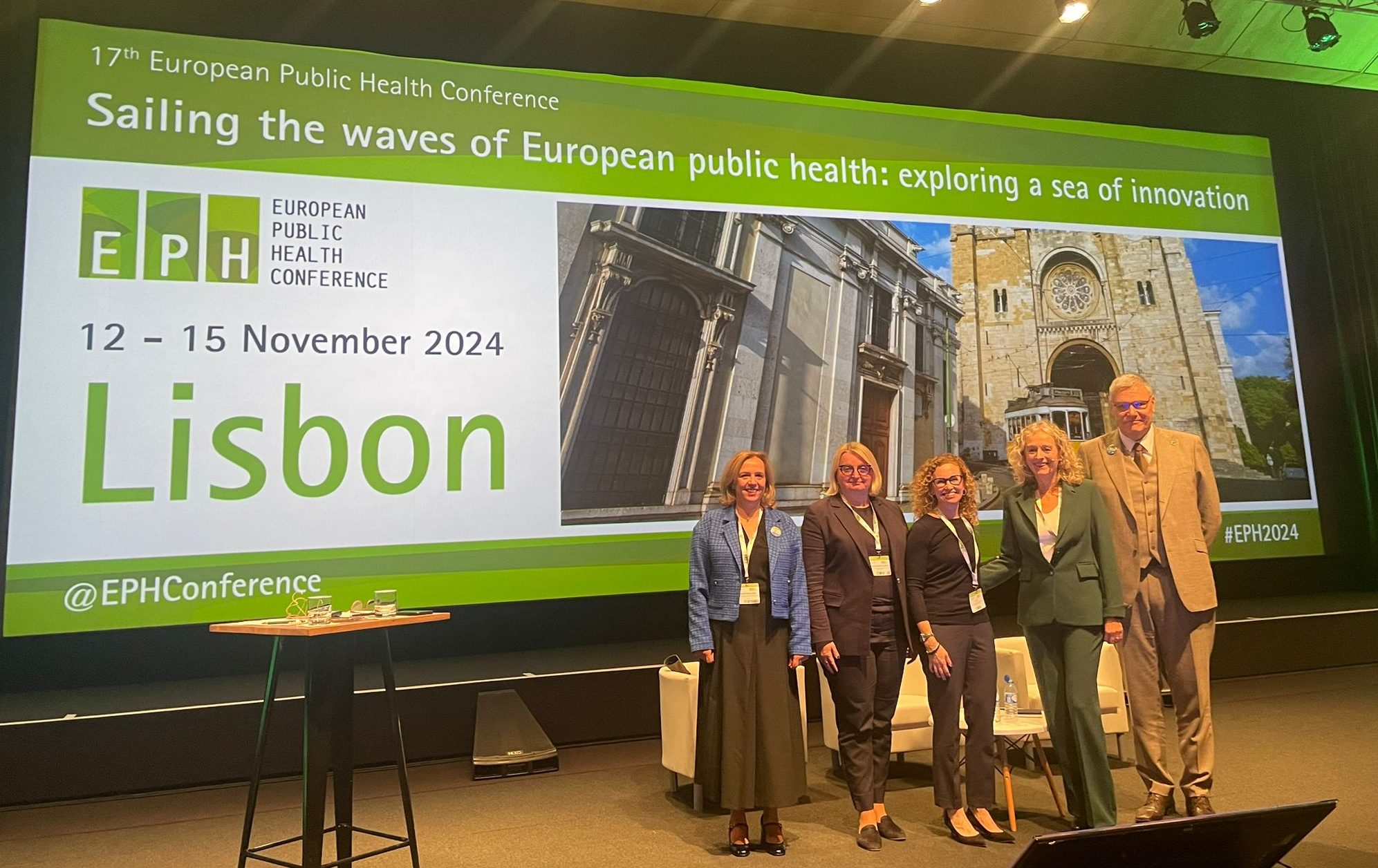
The UNESCO Chair team took part in the 17th European Public Health Conference which was held 12-15 November 2024 in Lisbon, Portugal. There is clearly a more prominent place for health promotion and reducing health inequalities in public health.

Tackling health inequalities in times of crisis – the educational perspective

During the EPH Conference one of the plenary sessions was on “Tackling health inequalities in times of crisis”, organised by EuroHealthNet. According to key-note speaker Fran Baum: ‘we are living in a world facing a poly-crisis that is threatening health equity. We face a multitude of challenges which significantly impact individuals’ health and well-being and create the conditions for persisting health inequalities’.

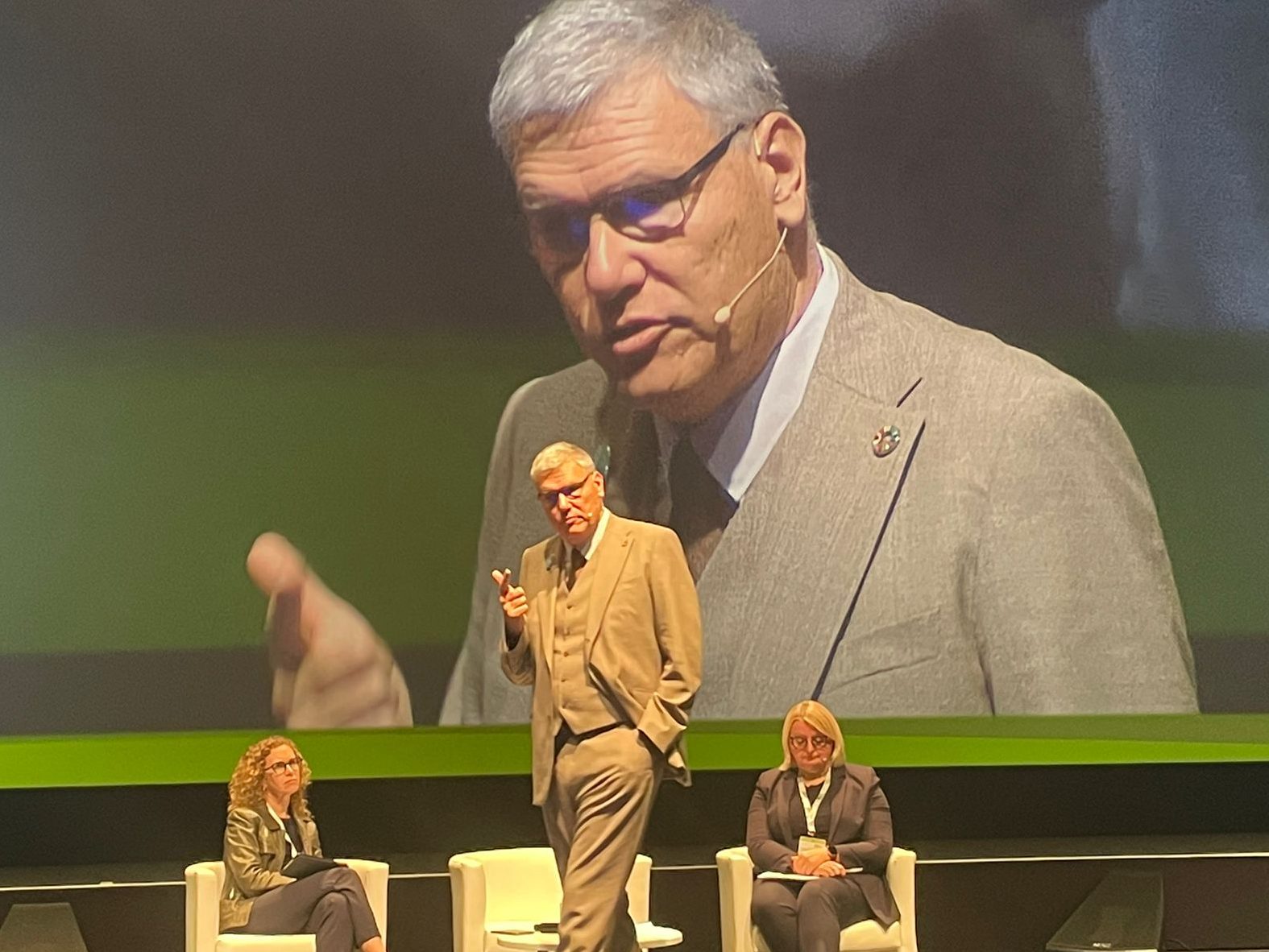
Tackling health inequalities in times of crisis requires action across societal sectors and levels. As a panelist Didier Jourdan, chairholder of the UNESCO Chair on Global Health & Education, gave a reflection from the educational perspective. He shared 4 ideas:

1) Education has a close-response relationship with all-cause morbidity;
2) Education systems are key actors in public health, not mere instruments;
3) A school that promotes health is first of all a good, inclusive and equitable school;
4) To fight inequalities we need to harness the power of formal, non-formal and informal education.

Recordings of all plenary sessions are available on EPH Conference’s YouTube channel.

Pre-conference on the effectiveness of complex health promotion interventions

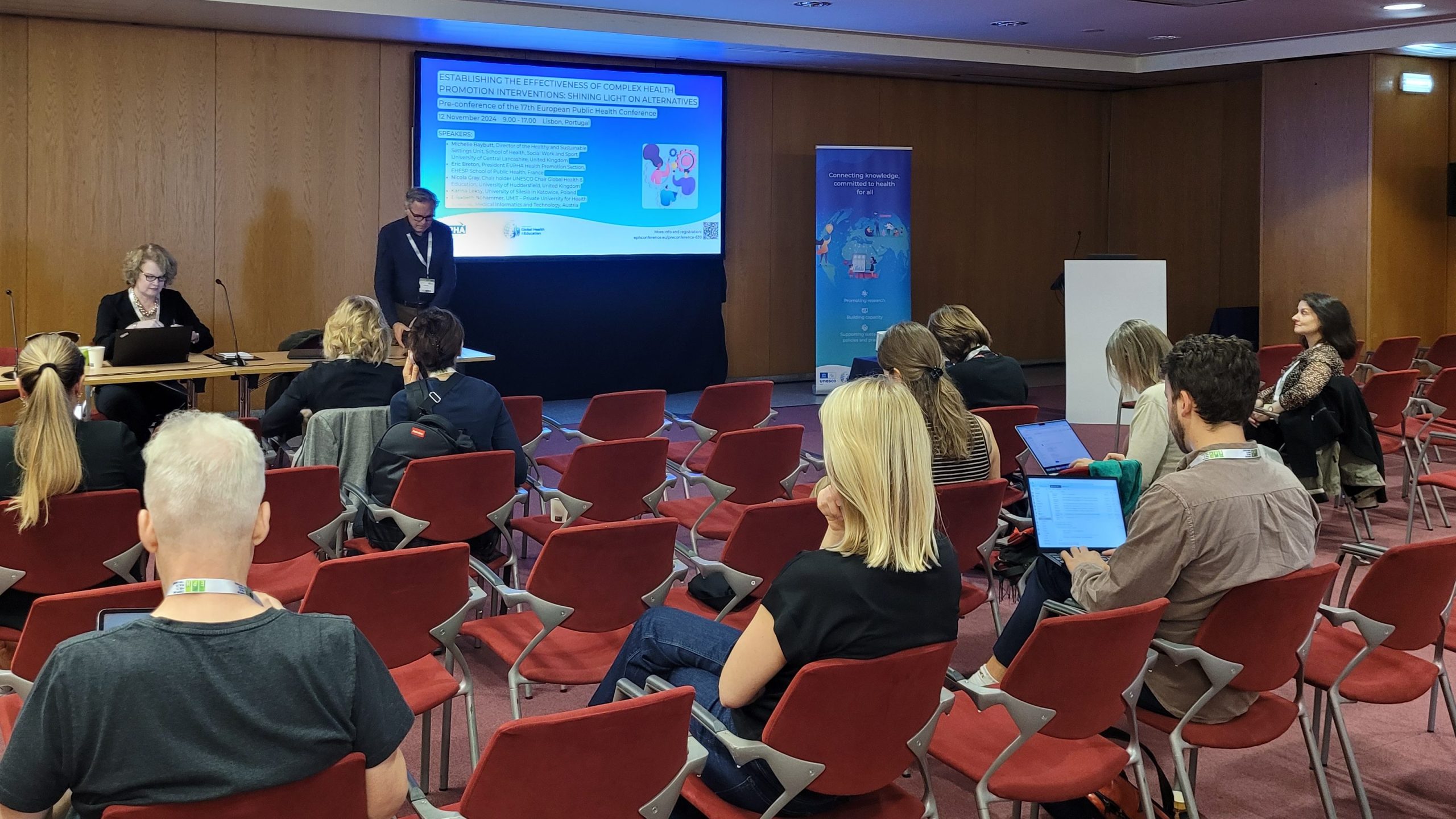
On 12 November one of the pre-conferences was on “Establishing the effectiveness of complex health promotion interventions: Shining light on alternatives”. It was organised by the EUPHA Health Promotion section, in collaboration with the UNESCO Chair on Global Health & Education.

During the pre-conference, the challenges facing health promotion practitioners and researchers in establishing the effectiveness of their programmes and policies was discussed. Also alternatives to the traditional epistemological and methodological perspectives were explored.  The statement of the pre-conference will be available early 2025. The presentations can be downloaded from the dedicated webpage.

Portuguese launch event of the UNESCO Chair Global Health & Education

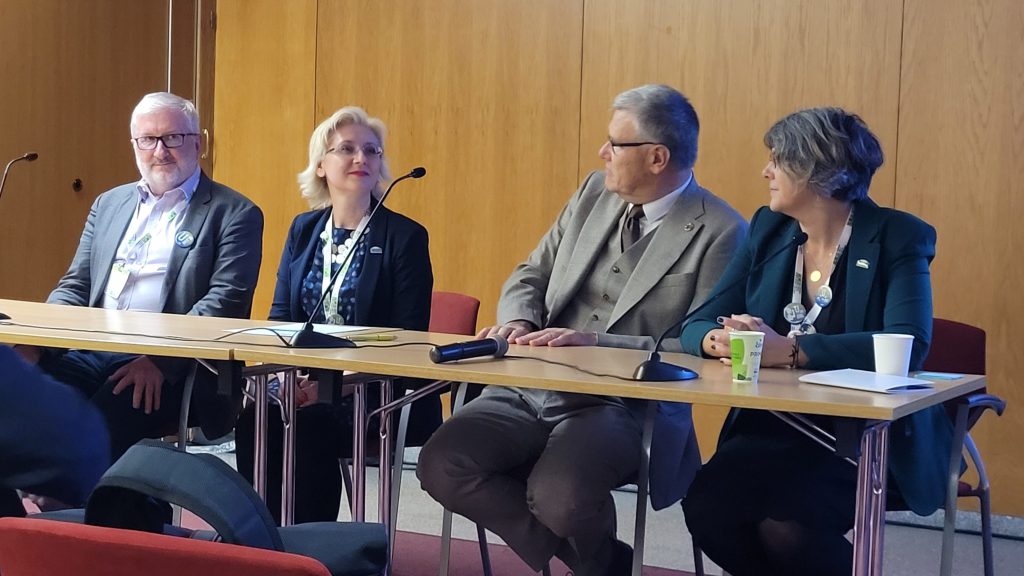
The Portuguese launch event of the UNESCO Chair on Global Health & Education took place on 12 November 2024 during the 17th European Public Health Conference in Lisbon, Portugal. It was organised in collaboration with the Research Centre on Child Studies (CIEC), Institute of Education, University of Minho.

During the meeting the UNESCO Chair Global Health & Education was introduced and the collaborative research with University of Minho, Portugal, São Paulo State University, Brazil and Rovuma University, Mozambique on the safe re-opening of schools during COVID-19 was highlighted. The presentations can be downloaded from the dedicated webpage.

Partnership agreement UNESCO Chair and EUPHA

During the launch event the new partnership agreement between the UNESCO Chair and EUPHA was signed.

Posted by Didier in News
Article on mapping research literature health promotion in schools

Article on mapping research literature health promotion in schools

Recently the article ‘Health promotion in the school context: a scientific mapping of the literature[1] is published in Health Education (31 October 2024).

The study presents an overview of research literature on health promotion in schools, utilizing metadata extracted from 4,328 publications indexed in the Scopus database over the past 35 years. A bibliometric approach was used to analyze the development and current state of using publication and citation data. A structured keyword search was conducted in the Scopus database to retrieve relevant publications in the field. Frequency counts, rank-ordered tables, and time series charts were used to illustrate the dynamic growth of publication and citation data, the core journals, the leading countries, and the most frequently used keywords in research on health promotion in school contexts. A series of social network analyses was conducted to explore and visualize the social, intellectual, and conceptual structure of the field.

Findings demonstrate that health promotion in school contexts is a growing research field that has gained significant momentum in recent years. The research in this field is widely distributed internationally, but research output is dominated by the US and other English-speaking countries. The study reveals a trend towards increased collaboration among research groups. The level of international collaboration varies. The research field is highly interdisciplinary and the main research themes addressed in the literature include mental health, well-being, and quality of life; health behaviors; oral health education; sexual and reproductive education; and general health promotion and health education in schools. This is the first study to map the development of a research field with growing recognition. It provides a comprehensive overview of the emerging field of health promotion in school contexts and its progress over time, contributing to the organization of the research domain. The study demonstrates the need for a new framework for health promotion research that supports the sustainability of health promotion research in schools.

Read the full article

Posted by Didier in News
Publication: COP26 special report on climate change and health: the health argument for climate action

Publication: COP26 special report on climate change and health: the health argument for climate action

Ahead of the COP26 WHO published the report “COP26 special report on climate change and health: the health argument for climate action”. The 10 recommendations in the COP26 Special Report on Climate Change and Health propose a set of priority actions from the global health community to governments and policy makers, calling on them to act with urgency on the current climate and health crises.

The recommendations were developed in consultation with over 150 organizations and 400 experts and health professionals. They are intended to inform governments and other stakeholders ahead of the 26th Conference of the Parties (COP26) of the United Nations Framework Convention on Climate Change (UNFCCC) and to highlight various opportunities for governments to prioritize health and equity in the international climate movement and sustainable development agenda. Each recommendation comes with a selection of resources and case studies to help inspire and guide policymakers and practitioners in implementing the suggested solutions.

The 10 recommendations on climate change and health:

  1. Commit to a healthy recovery.
  2. Our health is not negotiable.
  3. Harness the health benefits of climate action.
  4. Build health resilience to climate risks.
  5. Create energy systems that protect and improve climate and health.
  6. Reimagine urban environments, transport, and mobility.
  7. Protect and restore nature as the foundation of our health.
  8. Promote healthy, sustainable, and resilient food systems.
  9. Finance a healthier, fairer, and greener future to save lives.
  10. Listen to the health community and prescribe urgent climate action.

Access to the full report.

Posted by Didier in News
Webinar: Click, Connect and Prevent: Tackling Cyberbullying in Schools’ Part 2 – 10 December 2024

Webinar: Click, Connect and Prevent: Tackling Cyberbullying in Schools’ Part 2 – 10 December 2024

The next session of the ‘Connect and Learn’ Community of Practice webinar series:  “Click, Connect and Prevent: Tackling Cyberbullying in Schools” Part 2!  will take part on Tuesday 10 December 2024. This session will build on the previous discussion and focus on equipping educators and stakeholders with practical skills to prevent, recognize, and address cyberbullying using a whole school approach.

After registering, you will receive a confirmation email with details to join the webinar.

Posted by Didier in News
25th IUHPE World Conference on Health Promotion – submit your abstract

25th IUHPE World Conference on Health Promotion – submit your abstract

Share your research, innovations, and insights at 25th IUHPE World Conference on Health Promotion “Settings for Plenetary Health & Well-Being”. Be part of the global conversation on health promotion by submitting your abstract today. Showcase your work to an international audience and contribute to shaping the future of health and well-being. 

The 25th IUHPE World Conference on Health Promotion will take place from 13 -16 May 2025 in Abu Dhabi, United Arab Emirates. It is set to bring together global leaders, experts, and advocates in health promotion and education to shape health promotion initiatives and strategies. From tackling local and regional health issues to sharing insights on global frameworks.

Submit your abstract before 10 December 2024!

Early bird registration closed on 15th February 2025.

More information about the 25th IUHPE conference.

Posted by Didier in News
A Human-Centered Approach to Digital Education and Training – 29th ENETOSH Network Meeting on December 10, 1:00 – 3:30 (CET)

A Human-Centered Approach to Digital Education and Training – 29th ENETOSH Network Meeting on December 10, 1:00 – 3:30 (CET)

The digitalization of education and training brings significant opportunities but also raises concerns about the safety, health, and well-being of both learners and educators.

The European Network Education and Training in Occupational Safety and Health (ENETOSH) invites all to this joint event with the Department of Education and Health, Leuphana GmbH – Leuphana Universität Lüneburg (Lüneburg, Germany) and the UNESCO Chair Global Health & Education (Paris, France).

Programme

The 29th ENETOSH Network Meeting will address the themes in two focused sessions:

Session 1: Integrating AI in Education and Training Responsibly
The first session explores how digitalization—especially through AI-based tools—can be systematically and humanely integrated into educational practices. Highlighted will be Austria’s eEducation initiative by the Federal Ministry of Education, Science, and Research, which is currently piloting AI learning software in select “AI Pilot Schools.” Additionally, the session will introduce the “FriendlyTechCheck” dialog tool, developed as part of the “HUMAINE” project at the University of Duisburg-Essen. This tool assists organizations in assessing psychosocial risks and benefits when implementing AI technologies in the workplace.

Session 2: Improving the quality of education through the Good Healthy School Initiative (GHSI))
The second part highlights the Good Healthy Schools Initiative (GHSI), which is led by the Department of Education and Health of Leuphana GmbH, a subsidiary of Leuphana University Lüneburg, in cooperation with the UNESCO Chair for Global Health & Education, Paris (Goof Buijs). The GHSI aims to establish health and safety as an integral part of the school education framework to promote both health and learning outcomes. Through a holistic approach that strengthens the entire school community, the approach understands health as the basis for academic success. The initiative aims to build a network that brings together decision-makers from the education and health sectors to improve the mental, emotional, physical and social well-being of students and teachers, and thus improve the quality of education in the long term.

Registration Deadline: December 2, 2024
More information
Programme and online registration

Posted by Didier in News
JCIHE Call for Proposals for Special Issue: Global Health, Politics, and Education in Africa

JCIHE Call for Proposals for Special Issue: Global Health, Politics, and Education in Africa

The Journal of Comparative and International Higher Education launched a Call for Proposals for the Summer 2026 Special Issue: Global Health, Politics, and Education in Africa. Guest editors are: Didier Jourdan, Chair holder UNESCO Chair and WHO Collaborating Center on Global Health & Education; Carole Faucher, Affiliated researcher UNESCO Chair on Global Health & Education & Lul Admasachew, Affiliated researcher UNESCO Chair on Global Health & Education.

Papers in this special issue will expound on the United Nations Decade of Action for Sustainable Development. Articles should draw on concepts of “Health is Politics” within the African continent. In all regions, but particularly in Africa, higher educational institutions can be politicized irrespective of academic freedom being declared. Innovations in global health are also influenced by politics. This begins where fundings comes from and bibliometric inequalities in what is published, in what journals, and the influences of bibliographic colonialism. Critical and decolonial health and education are pertinent for emancipation. Political agendas are at an interplay within higher education with expression of diverse views and forms of knowledge.

This special issue invites contributions to submit empirical or theoretical articles pointing to the Pan African knowledge in global health, politics, and education that intersects with AIDS, mpox, pandemic prevention, that is largely defined by Western knowledge holders that influence how Global South academia presents knowledge to the general public.

Themes to be Explored:

  1. Pandemic Prevention Accord and ways to engage all stakeholders
  2. Education, vaccinations as politics
  3. Impact of AIDS and mpox education for community health
  4. Sexuality education
  5. Faith-based medicine
  6. Virtual platforms to uphold education within political agendas
  7. The otherness standpoint epistemology, health and politics
  8. Decolonization of knowledge: critical internationalization trends, innovation and agendas

Submit 500 word proposals to: lul2lul@yahoo.com or via the JCIHE website. Proposals are due by January 10, 2025, with full manuscripts due by May 15, 2025. All articles will undergo a double-blind peer review process and must follow the JCIHE guidelines.

Posted by Didier in News
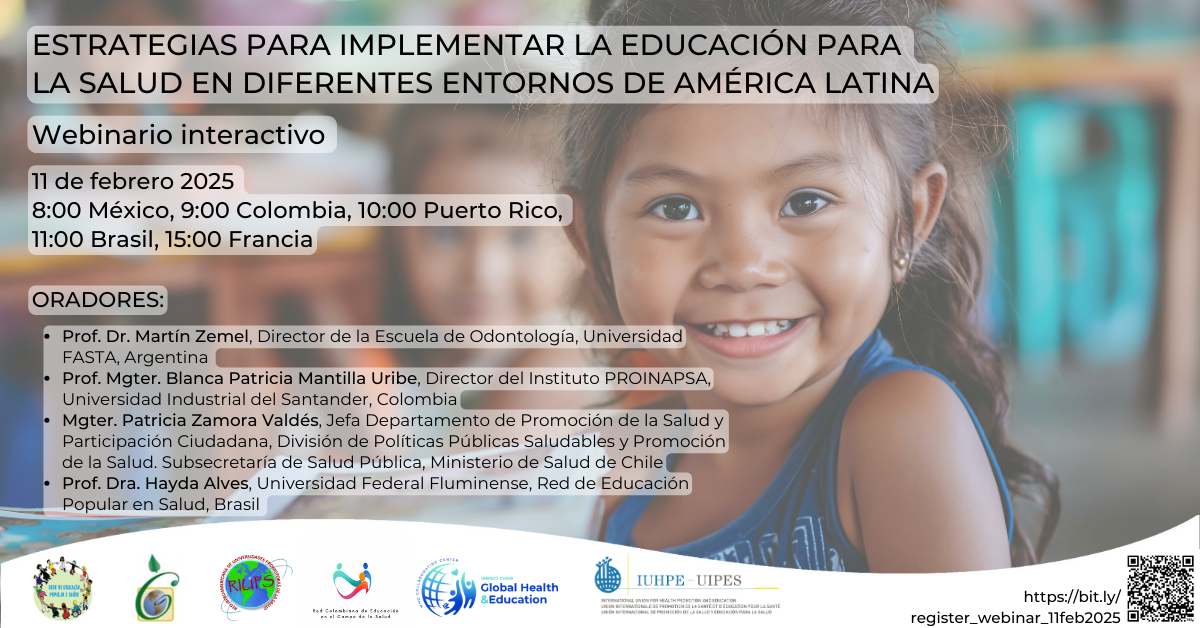
26 November 2024 – Webinar: The invisibilization of health education and how it can be revitalized, also recovering Latin American experiences and productions

26 November 2024 – Webinar: The invisibilization of health education and how it can be revitalized, also recovering Latin American experiences and productions

Time: 8.00 Mexico, 9.00 Colombia, 10.00 Puerto Rico, 11.00 Brasil, 15.00 France

Language: The webinar will be held in Spanish. Translation will be available in 50+ languages, including English, French, Portuguese and Spanish. We will use a translation app based on AI.

Link to register. Registration is free. The link to the webinar will be sent to you after registration.

Información en español, Informações em português

Speakers

Dr. Pilar Campos is Regional Health Promotion Advisor at the Pan American Health Organization (PAHO), Department of Family, Health Promotion and Life Course, Unit for Health Promotion and Social Determinants.

Dr. Aurinés Torres Sánchez is a Popular Educator, public health educator and doctor in education with more than 30 years of experience in community health programmes with vulnerable populations. Her work is characterised by the exploration and practice of theoretical and practical foundations for liberating and decolonising methodologies and curricula, and by promoting transdisciplinary approaches inspired by Buen Vivir. Its community and academic practice in decolonising public health aims to achieve collective health with dignity for all, guided by the defence of human rights and social, racial and gender justice. Among her diverse contributions, she co-created the first Boricua Model for the Training of Community Health Promoters that uses Popular Education to promote community development and empowerment towards a dignified and decolonial collective health. In 2019, she founded ‘Aula Comunitaria PR’ which provides formative and investigative accompaniment in decolonial health to individuals and groups that assume community leadership in the archipelago of Puerto Rico. Aurinés is a university professor of courses in public health, popular health education, community health, participatory action research and curriculum design at the University of Puerto Rico, Medical Sciences, Cayey and Río Piedras campuses. She is currently president of the Board of Directors of La Colmena Cimarrona in Vieques and a member of the Puerto Rico Agroecology Trust. Dr. Torres Sánchez has presented her work at scientific conferences and community-based meetings in the local and international community and participates in social justice movements in Latin America, Puerto Rico and the USA.

Dr. Dora Irma Cardaci Rodríguez graduated from the Faculty of Philosophy and Literature, University of Buenos Aires, Argentina, from the Master’s Degree in Social Medicine, Universidad Autónoma Metropolitana-Xochimilco and from the PhD in Anthropology, Medical Anthropology, National School of Anthropology and History, Mexico. She is currently a Full-Time Professor-Researcher in the Department of Health Care, Universidad Autónoma Metropolitana Xochimilco, Mexico. She has been appointed as a National Researcher Level 2, by the National System of Researchers. In 2007 she was elected Vice-President for Latin America of the International Union for Health Promotion and Education (IUHPE), a position she held until 2010. She was deputy editor of the journal Global Health Promotion, and a member of the Editorial Board of Review of Health Promotion and Education on Line. She has served as a temporary consultant to UNICEF, PAHO, UNESCO and UNFPA on health education and promotion, medical education and health and gender.

Moderator

Prof. Dr. Fernando Peñaranda Correa is a medical doctor. Master’s in public health, master’s in education and social development and doctor in Social Sciences, Childhood and Youth. He is a professor and senior researcher of the Health and Society Research Group of the National School of Public Health of the University of Antioquia. He is the coordinator of emphasis in health education of the master’s in public health. He has been a professor in the undergraduate and graduate programs of the Faculty and in other universities in the country, in the following topics: epistemology, qualitative research, ethics and social justice, public health, health promotion and health education. He has written numerous articles, book chapters and books in the areas of health education, qualitative research, ethics and public health and social justice.


Summary

The questions that will be addressed during the webinar are:

  1. What is the relevance and role that has been given to health education in health systems, in academia and in the activities of the civil society/community?
  2. What actions are being taken at the level of health systems, academia and civil society/community to revitalize health education?

Latin American Program to promote health education

This webinar is a part of the “Latin American Program to promote health education.  This initiative is being promoted with the participation of the UNESCO Chair in Global Health and Education, the Inter-American Consortium of Universities and Training Centers for Health Education and Health Promotion (CIUEPS), the Brazilian Network of Popular Health Education, the Colombian Network of Health Education and the International Union of Health Promotion and Health Education (IUHPE), with the following objectives:

  • Promote health education at national and international levels, as a fundamental dimension of the health disciplines, the educational sciences and the social and human sciences.
  • To recuperate the Latin American production and position it in the regional level, which implies promoting its critical and decolonial approaches. A health education that advocates for social transformation towards a more just and equitable society that guarantees well-being and a life with dignity.
  • Promote the articulation of the education and health sectors to strengthen the actions of each of these sectors to promote health education, by recognizing education and health as two inalienable, synergistic and interdependent human rights.
  • Strengthen the theoretical, political and ethical foundations of health education as a requirement for a responsible, productive and ethical pedagogical praxis.
  • To generate a setting for the articulation of academia and civil society that allows Latin American integration in order to share experiences, knowledge and aspirations framed in a collective purpose.
  • To promote national and international integration with respect to health education as a means for mutual learning and solidarity, and to facilitate cooperative actions in the development of academic-scientific events, research and training processes.

The webinars, open to all interested stakeholders, are a component of the program. They are experiential sessions, lasting 60-90 minutes, with guest speakers who present their reflections on two or three problematic questions to encourage audience participation. Five webinars have been scheduled for this first stage of the program, with an interval of 2 months between each one.

Posted by Didier in News
SHE inventory about implementation monitoring of the HPS approach

SHE inventory about implementation monitoring of the HPS approach

The Implementation Team of the Schools for Health in Europe (SHE) Research Group invites those who are engaged in health promotion in schools to participate in an inventory. The aim of the inventory is to explore the state of the art within countries/regions with regard to instruments to monitor/evaluate the implementation of the Health Promoting School (HPS) approach. The survey is available in English and French (you can choose the language with the options on the top right). You can answer in English, French or in your first language.

You can find the survey at this link: https://psicologiaunimib.qualtrics.com/jfe/form/SV_3n6ClB2LRRjqHKm

Monitoring the implementation of the HPS approach

The inventory constitutes a first step in researching the topic of implementation in different countries/regions. Sharing experiences about implementation practices among professionals, researchers, and policymakers is fundamental to fostering health promotion in schools. The results will help identify existing published and unpublished evaluation/monitoring instruments and standards, promote collaboration, and offer the possibility of adapting and developing shared instruments. We invite professionals, policy makers and researchers from all over the world to share the instruments used in their countries.

SHE Research Group Implementation Team

The SHE Research Group Implementation Team is part of the Schools for Health in Europe (SHE netork). The SHE Research Group aims to foster research and share development processes for health promotion in schools, as well as practices, experiences, and evidence-based interventions. The Implementation Team consists of: Veronica Velasco, Stefano Delbosq, Kathelijne Bessems, Patricia van Assema, Anne Torhild Klomsten, Karina Leksy and Kevin Dadaczynski.

More information:

Posted by Didier in News