T he Health Behaviour in School-aged Children (HBSC), a WHO collaborative cross-national study, has been seeking to understand and monitor young people’s health across Europe and Canada for more than 30 years. As the study has grown to include 50 member countries and regions, the utility of the data it provides about the health, well-being, social environment and health behaviour of 11-, 13- and 15-year-old boys and girls has also grown. The seventh international report offers findings on adolescent health and well-being from 45 participating countries and regions in 2017/2018. It presents data from over 220 000 young people in 45 countries and regions in Europe and Canada. The data focus on social context (relations with family, peers, school and online communication), health outcomes (subjective health, mental health, overweight and obesity, and injuries), health behaviours (patterns of eating, physical activity and toothbrushing) and risk behaviours (use of tobacco, alcohol and cannabis, sexual behaviour, fighting and bullying) relevant to young people’s health and well-being. New items on electronic media communication and cyberbullying and a revised measure on family meals were introduced to the HBSC survey in 2017/2018 and measures of individual health complaints and underweight are also included for the first time in the report.
The report is divided into two volumes. Volume 1 provides an overview of the key findings highlighting important gender and socioeconomic differences, as well as changes since the last survey in 2013/2014. The key data are presented in Volume 2 in a series of charts showing country/region-level and overall prevalence by age, gender and family affluence.
Hans Henri P. Kluge, WHO Regional Director for Europe, explains the following in his foreword: “Life has changed enormously in Europe over the last two decades. Digitization, globalization, migration, urbanization and climate change mean we now live in a more complex Europe. Young people are often the first to be exposed to and affected by these changes and have become outspoken advocates on issues such as climate change. It is important, at European level and in each country/region, to understand what young people think, know and understand in terms of their health, and how they behave. The Health Behaviour in School-aged Children (HBSC) study, now presenting its seventh international report, helps us with all of this. HBSC is truly international; (…) And its primary purpose is to advocate for policy changes to safeguard the health and well-being of one of society’s most vulnerable groups – children and adolescents. (…) . This seventh international report and the vital data it presents shows that HBSC is, and will continue to be, a central support of the new vision for the WHO Regional Office for Europe.”



 NCD Child recently launched a new report entitled ‘


 The World Health Organization is today launching a new kit for school students aged 13-17 to alert them to the tobacco industry tactics used to hook them to addictive products. Increasingly, the tobacco industry is targeting young people with nicotine and tobacco products in a bid to replace the 8 million people that its products kill every year.


 UNESCO is calling on inspiring voices from across the globe to take part in a series of online discussions to help us imagine the world taking shape as a result of the COVID-19 crisis. The series will kick off in May with a unique event featuring leading women experts and thinkers.


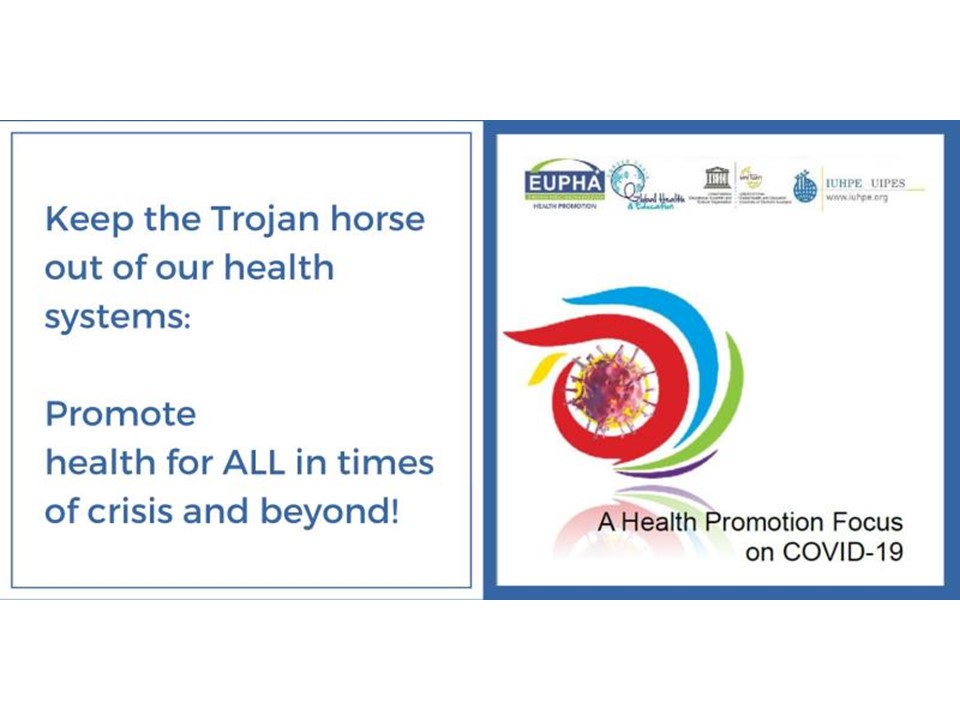

 OECD recently published a report which aims at supporting education decision making to develop and implement effective education responses to the COVID-19 pandemic. In most countries around the world school-based education will be disrupted for several months due to the social isolation measures as a response to the COVID-19 Pandemic. Without an effective strategy to protect learning opportunities during this period, this disruption will cause severe learning losses for students.
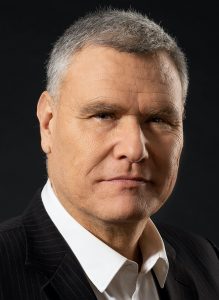 About Didier Jourdan