article

Article: Comprehensive Sexuality Education, Healthcare Professional Associations, and the Future of the World’s Youth

Article: Comprehensive Sexuality Education, Healthcare Professional Associations, and the Future of the World’s Youth

Just published in the Journal of Adolescent Health, Science Direct: “Comprehensive Sexuality Education, Healthcare Professional Associations, and the Future of the World’s Youth”[1].

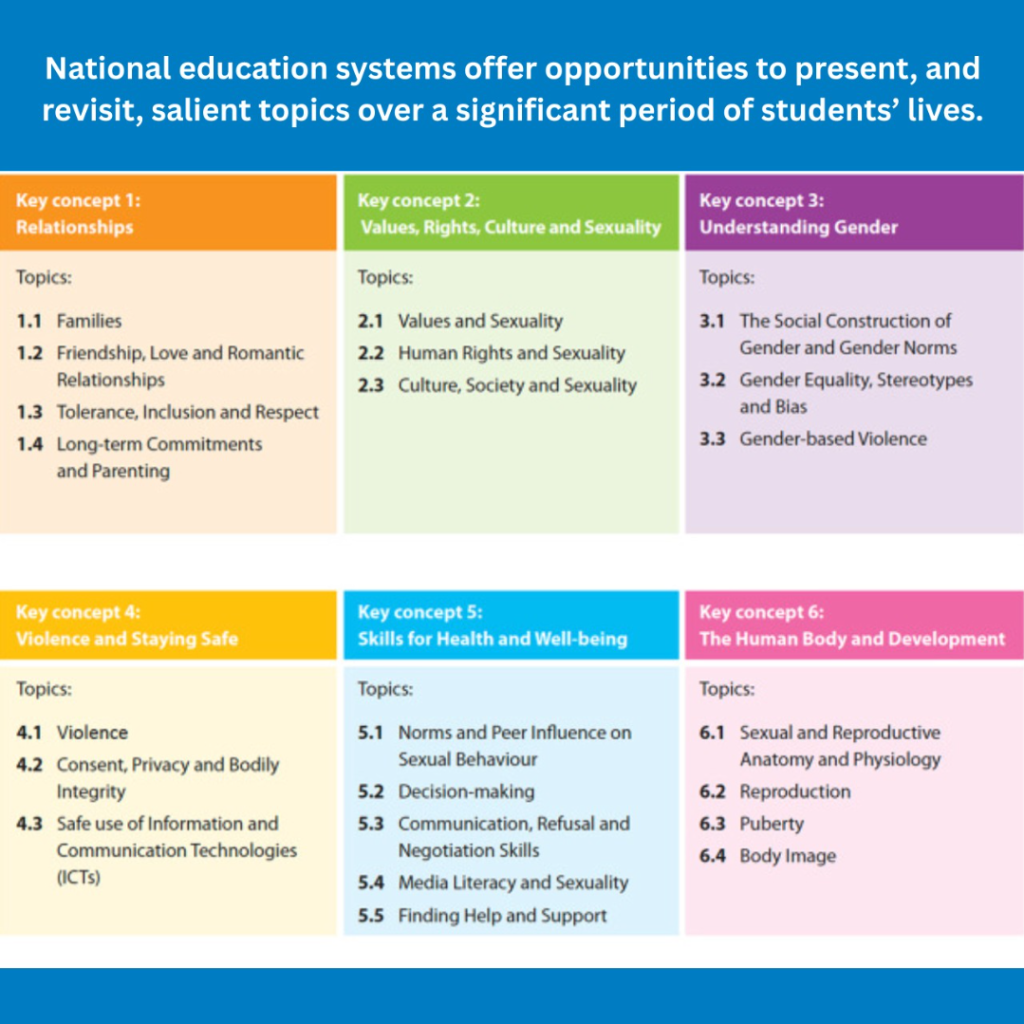
Sexual and reproductive health rights are agreed in international laws. In recent years, however, diminishing reproductive health rights have been seen across the globe, including limitations in the provision of comprehensive sexuality education (CSE) for adolescents and young adults (AYAs). CSE aims to empower AYAs to realize their health and dignity, consider the impact of their health choices, and develop respectful relationships in order for them to lead their best lives. Recognizing these increasing threats to what AYAs need and want, five healthcare professional associations engaged in discussion with UN agencies and each other about advocating effectively for evidence-based CSE; this commentary summarizes five policy statements motivated by these discussions and registers publicly their collective organizations’ support for CSE in schools.

Four common themes about CSE were drown out of the five position statements that the five associations published in 2023-24. Collectively, they offer a compelling case for the ongoing promotion and scale-up of CSE within national curricula in schools. They also highlight the roles of healthcare professionals in advocacy and in practical capacity-building support for schools, families, and communities:

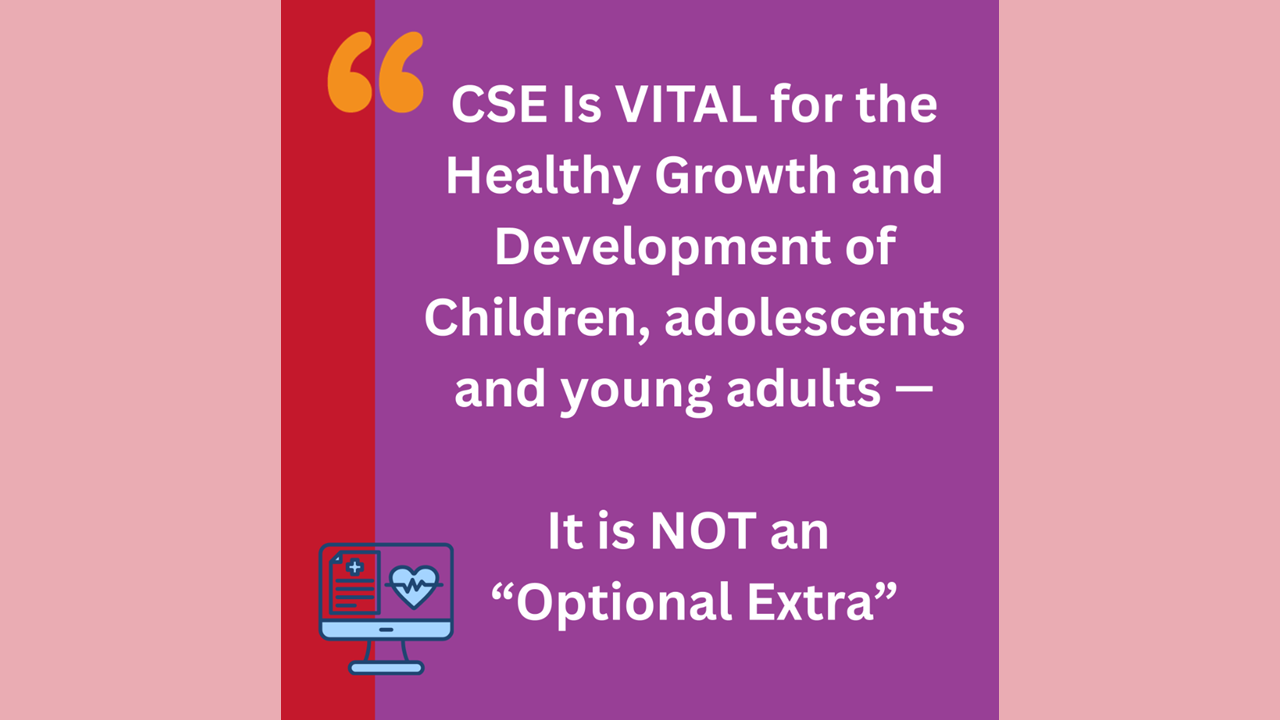
  • CSE Is Vital for the Healthy Growth and Development of Children and AYAs—It is Not an “Optional Extra”
  • CSE Development Needs the Involvement of Children and AYAs
  • CSE Is an Intersectoral Endeavor
  • Members of Healthcare Professional Associations Have Untapped Agency in Advocacy for Evidence-Based CSE

The five healthcare professional association:

  • International Federation of Paediatric and Adolescent Gynaecology (FIGIJ)
  • International Federation of Gynecology and Obstetrics (FIGO) 
  • International Association for Adolescent Health (IAAH)
  • International Pediatric Association (IPA) 
  • World Association for Sexual Health (WAS)
Read the full article

Read support statements


[1] Nicola J. Gray, C.P. Bansal, Esther Corona, Yasmin Jayasinghe, Melissa Kang, Marisa Labovsky, Aparna Sridhar, Linda Sussman, Jonathan D. Klein. Comprehensive Sexuality Education, Healthcare Professional Associations, and the Future of the World’s Youth. Journal of Adolescent Health, 2025. ISSN 1054-139X. https://doi.org/10.1016/j.jadohealth.2025.02.002.
Posted by Didier in News
Article on mapping research literature health promotion in schools

Article on mapping research literature health promotion in schools

Recently the article ‘Health promotion in the school context: a scientific mapping of the literature[1] is published in Health Education (31 October 2024).

The study presents an overview of research literature on health promotion in schools, utilizing metadata extracted from 4,328 publications indexed in the Scopus database over the past 35 years. A bibliometric approach was used to analyze the development and current state of using publication and citation data. A structured keyword search was conducted in the Scopus database to retrieve relevant publications in the field. Frequency counts, rank-ordered tables, and time series charts were used to illustrate the dynamic growth of publication and citation data, the core journals, the leading countries, and the most frequently used keywords in research on health promotion in school contexts. A series of social network analyses was conducted to explore and visualize the social, intellectual, and conceptual structure of the field.

Findings demonstrate that health promotion in school contexts is a growing research field that has gained significant momentum in recent years. The research in this field is widely distributed internationally, but research output is dominated by the US and other English-speaking countries. The study reveals a trend towards increased collaboration among research groups. The level of international collaboration varies. The research field is highly interdisciplinary and the main research themes addressed in the literature include mental health, well-being, and quality of life; health behaviors; oral health education; sexual and reproductive education; and general health promotion and health education in schools. This is the first study to map the development of a research field with growing recognition. It provides a comprehensive overview of the emerging field of health promotion in school contexts and its progress over time, contributing to the organization of the research domain. The study demonstrates the need for a new framework for health promotion research that supports the sustainability of health promotion research in schools.

Read the full article

Posted by Didier in News
Publication – The Lancet and colonialism: past, present, and future

Publication – The Lancet and colonialism: past, present, and future

To mark its 200th anniversary, the Lancet has published an article[1] highlighting its past and more recent links with colonialist thinking. The publication shows how the journal has legitimised and continues to promote specific types of expertise, knowledge, perspectives and interpretations in the field of health and medicine. It is based on the assumption that colonised populations have inferior ways of producing knowledge and contributes to maintaining inequalities.
The Lancet’s role is not isolated; other institutions and knowledge platforms have promoted colonialist thinking. Based on concrete examples, this article aims to launch a wider debate on the decolonisation of knowledge sharing and production practices at global level.

[1] Khan, M. S., Naidu, T., Torres, I., Noor, M. N., Bump, J. B., & Abimbola, S. (2024). The Lancet and colonialism : Past, present, and future. The Lancet403(10433), 1304‑1308. https://doi.org/10.1016/S0140-6736(24)00102-8

Read the article (free access)

Posted by Didier in News