Month: September 2026

WHO launches new e-learning course on behavioural sciences for better health

WHO launches new e-learning course on behavioural sciences for better health

Source: who.int

The World Health Organization (WHO) has launched a new self-paced online course, Behavioural Sciences for Better Health: An Interactive Course for Public Health Practitioners, available through the WHO Academy.                     

The course was developed to strengthen understanding and application of behavioural sciences in public health. It provides learners with practical knowledge and skills to identify the factors that influence health-related behaviours and to design more effective interventions, programmes and policies. 

Behavioural sciences: understanding why people behave as they do

Human behaviours sit at the heart of many of today’s most pressing health challenges, including vaccine uptake, antimicrobial resistance, physical activity, maternal and child health, and climate-related health risks, among others. While evidence-based interventions are essential to the achievement of better health outcomes, their effectiveness ultimately depends on whether people can adopt and sustain healthy behaviours. 

Behavioural sciences offer systematic approaches to understanding why people behave as they do. By examining psychological, cognitive, social, cultural and environmental influences on behaviours, public health practitioners can design interventions that are more responsive to people’s lived experiences and contexts, and therefore more likely to achieve meaningful outcomes.  

The new e-learning course at a glance  

The course introduces learners to key behavioural sciences concepts and demonstrates how behavioural insights can be integrated into public health work. Through interactive exercises, case studies and guided learning activities, participants explore practical approaches for identifying behavioural barriers and enablers and applying behavioural data and evidence to programme design, implementation and evaluation. 

A central feature of the course is WHO’s DDDIE framework (define, diagnose, design, implement and evaluate), which provides a structured process for generating and applying behavioural insights in public health programmes and policies. The framework supports practitioners in moving from identifying a behavioural challenge to developing, implementing and evaluating interventions informed by behavioural data and evidence. 

The course consists of nine modules and a final assessment and can be completed online in approximately five hours. No prior expertise in behavioural sciences is required. Participants who successfully complete the course assessment receive a WHO Academy award of completion. 

The learning programme forms part of WHO’s ongoing efforts to support implementation of World Health Assembly resolution WHA76.7 on Behavioural Sciences for Better Health. It complements a growing suite of WHO tools and resources designed to strengthen behavioural sciences capacity within public health institutions, including a tool to assess the Mainstreaming behavioural sciences into institutions responsible for public health: monitoring framework and indicators, the Decision support tool for establishing a behavioural insights function, and the Behavioural insights glossary for public health practitioners.   

Who this course is for

The course is designed for a broad audience, including public health practitioners, ministry of health staff, WHO personnel at national, regional and global levels, United Nations partners, non-governmental organizations, humanitarian actors, programme managers and policy advisers. By building foundational behavioural sciences knowledge and skills across sectors and disciplines, the course aims to support more effective public health action and contribute to improved health outcomes. 

For more information visit the WHO Academy website. 
Enroll in the course.

Posted by Didier in News
Promoting health in schools: taking action across the whole school environment to improve pupils’ health literacy

Promoting health in schools: taking action across the whole school environment to improve pupils’ health literacy

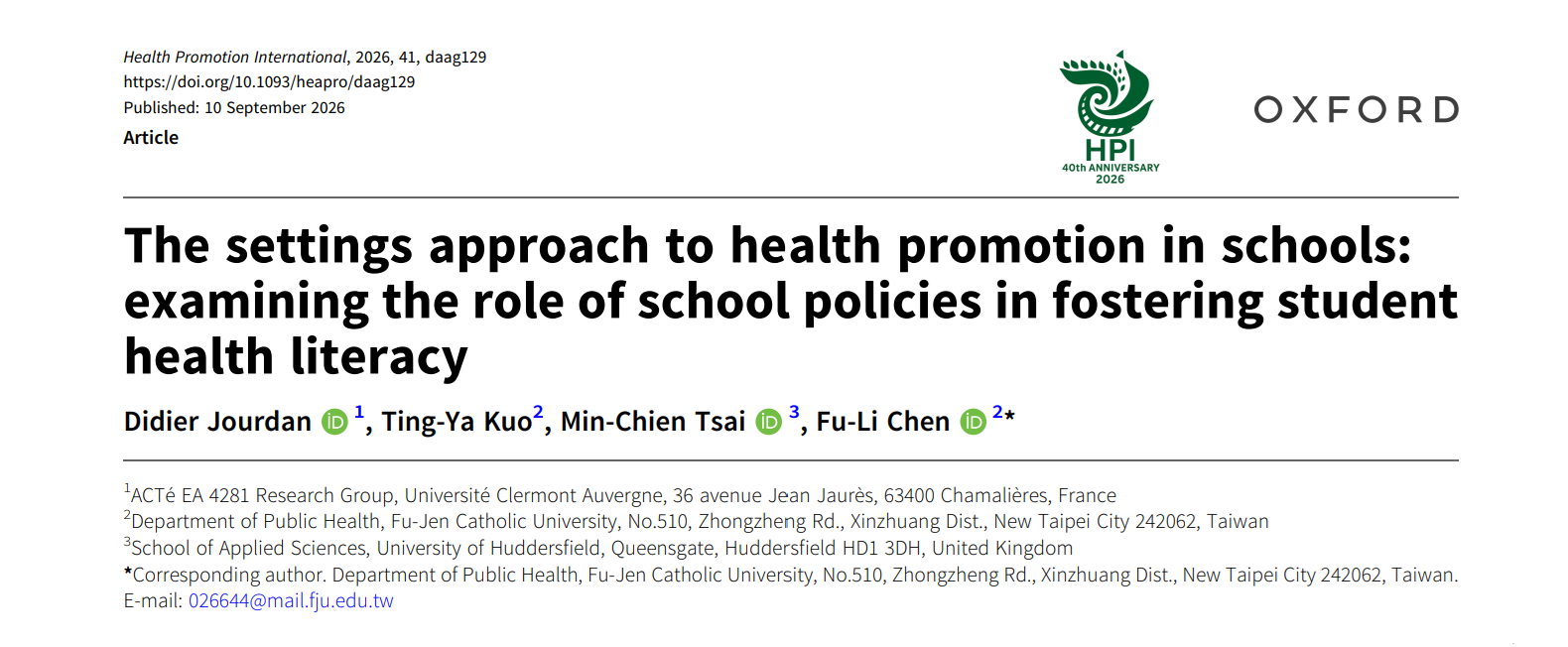
A new study published in Health Promotion International highlights the importance of comprehensive health promotion policies in schools for developing pupils’ health literacy – that is, their ability to find, understand, evaluate and use information to make decisions that are beneficial to their health.

The article, ‘The settings approach to health promotion in schools: examining the role of school policies in fostering student health literacy’, is based on data collected from 46 primary schools, involving 2,325 pupils, 552 teachers and 46 headteachers.

Health literacy is not developed solely in the classroom

The study shows that pupils’ health literacy is the result of a combination of individual, family, social and school-related factors. The socio-economic context remains significant: the mother’s level of education and the proportion of pupils receiving subsidised meals are, in particular, associated with the level of health literacy. However, the results also show that schools have their own levers of influence that they can utilise.

Pupils attending schools that implement the most comprehensive and integrated health promotion policies are more likely to have a high level of health literacy. This holistic approach does not rely on a single isolated initiative or programme. It incorporates various aspects of school life: the organisation and management of the school, teaching and learning, the physical and social environment, the involvement of pupils and staff, relationships with families and the community, and access to health and social services.

Other factors also appear to be key: collaboration with parents, teacher training in health promotion and teachers’ own levels of well-being are all associated, regardless of socio-economic factors, with better health literacy amongst pupils.

Moving from isolated measures to a coherent school policy

These findings support the so-called ‘settings approach’, which underpins the health-promoting schools model. It is no longer simply a matter of offering pupils specific health education lessons, but of creating an environment in which health is integrated into the day-to-day activities of the school.

One of the key findings of the study is therefore that the quality, consistency and degree of integration of the policy implemented matter. A health promotion policy cannot be viewed simply as an intervention that is either present or absent: the way in which its various dimensions are interlinked appears to play a role in the skills developed by pupils.

Collaboration with families also becomes meaningful when it forms part of this overarching strategy: the results suggest that an isolated partnership initiative is less likely to have an impact than a coherent approach across the whole school.

Supporting teachers: a key factor in pupils’ health

The study also reveals a particularly important finding concerning education professionals. Teachers’ training and well-being are not merely professional issues: they contribute to the conditions that enable pupils to develop their health literacy.

Analyses show that pupils whose teachers are better trained in health promotion and report higher levels of well-being are more likely to demonstrate high levels of health literacy.

This finding suggests that teachers should be considered key players within the school ecosystem. An ambitious policy to promote pupils’ health therefore also requires providing professionals with the skills, resources and working conditions necessary to take action.

A key challenge: tackling health inequalities from early childhood

Social inequalities continue to have a significant impact on children’s health literacy. However, the study shows that school policy features and teachers’ resources remain associated with health literacy even after taking these socio-economic differences into account.

Comprehensive whole-school approaches could therefore help to mitigate the effects of social inequalities on health literacy. Analysis of the different school profiles confirms, in particular, that it is not a single factor that makes the difference, but the combination of social context, health promotion policies, teacher training and professional well-being. Developing children’s health literacy involves creating school environments that effectively empower them to understand, evaluate and apply this knowledge in their lives.

The study thus provides new arguments in favour of sustained investment in health-promoting schools, in the professional development of teaching staff, and in their well-being. It also calls for further longitudinal research to better measure, over time, the effects of changes in school policies on pupils’ health literacy, health and educational pathways.

Reference
Didier Jourdan, Ting-Ya Kuo, Min-Chien Tsai, Fu-Li Chen, The settings approach to health promotion in schools: examining the role of school policies in fostering student health literacy, Health Promotion International, Volume 41, Issue 5, October 2026, daag129, https://doi.org/10.1093/heapro/daag129

Posted by Didier in News
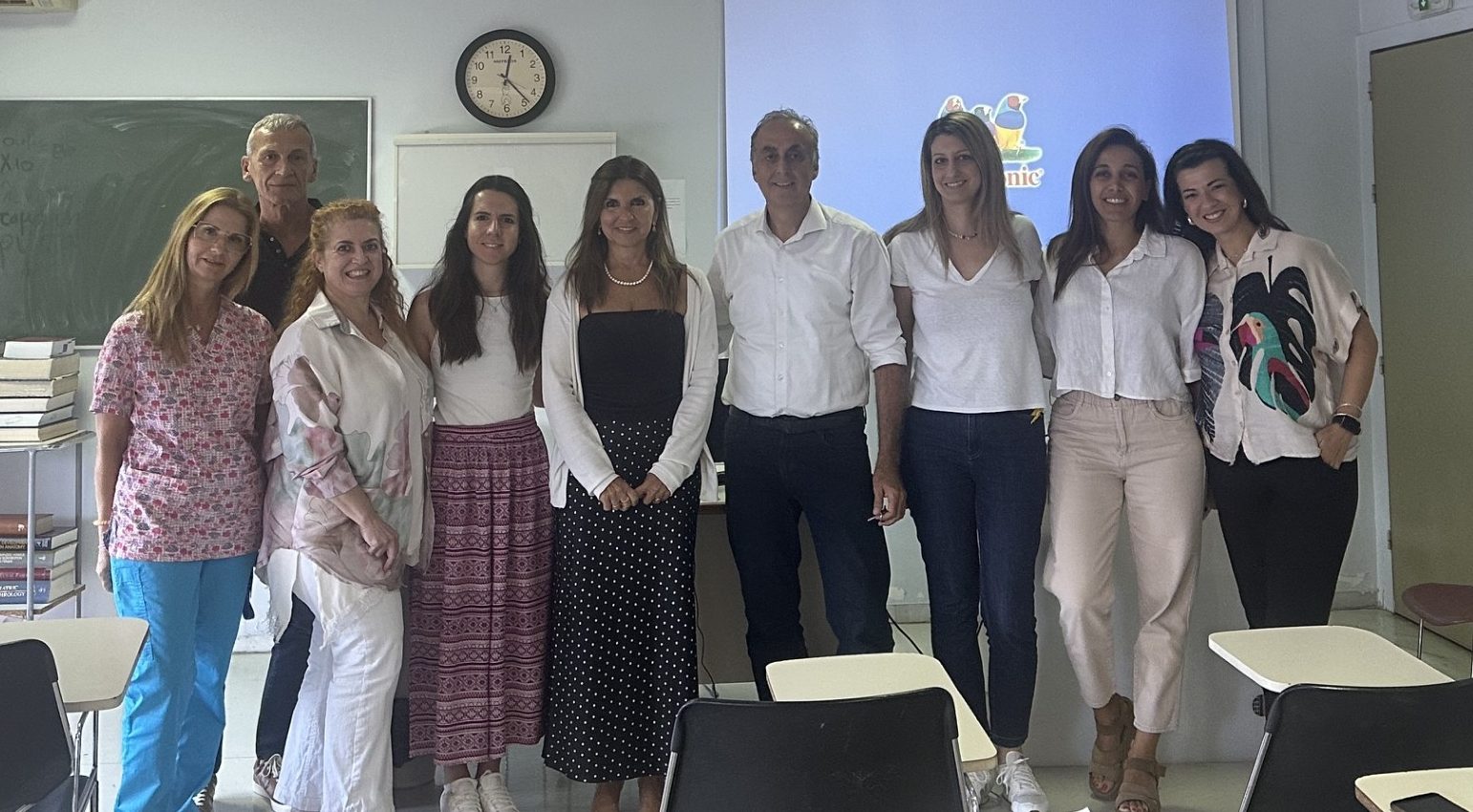
Strengthening Health Promotion Competencies in Adolescent Well-being Centres in Greece

Strengthening Health Promotion Competencies in Adolescent Well-being Centres in Greece

A group of professionals in Northern Greece, Thessaloniki, successfully completed a training and is ready to start the function of a youth friendly adolescent well-being centre in collaboration with the First Department of Pediatrics of the Aristotle University (Chair: Professor Dimitrios Zafeiriou, Scientific Head: Professor Ahanassios Christoforidis).   

A framework-based approach to adolescent well-being

The development of adolescent well-being centres in Greece is taking place within the framework of the national network of the UNESCO Chair Global Health & Education in Greece and in collaboration with institutional and scientific partners. It is grounded in the WHO Competency and Outcomes Framework for Adolescent Health and Well-being, the WHO Global Competency and Outcomes Framework for Universal Health Coverage, and the WHO European Region Strategy for Child and Adolescent Health and Well-being 2026–2030.

The Ross et al. adolescent well-being framework provides the background for understanding young people’s needs. It defines well-being as adolescents having the support, confidence and resources to thrive in secure and healthy relationships, realising their full potential and rights. It brings together five interconnected domains: good health and optimum nutrition; connectedness, positive values and contribution to society; safety and a supportive environment; learning, competence, education, skills and employability; and agency and resilience.

The programme therefore adopts a health-promotion perspective: it supports young people’s capacities and agency while improving the social, educational, family, community, service and digital environments that shape their opportunities for health and well-being.

Meeting adolescents’ needs

The adolescent well-being services for children and adolescents address all needs related to somatic, psychosocial and school health, and promote healthy choices and disease prevention. Social emotional empowerment, dgital education and social skills protocols are implemented creating a “HUG”.

This initiative is very crucial, given the special needs of adolescents and data indicating a significant rise in morbidity and high risk behaviors in both natural and digital environments. The UNESCO Chair Global Health & Education adolescent well-being services aim to support the healthy safe development of all children and adolescents in Greece.

Affiliated researcher and National Representative of the UNESCO Chair Global Health & Edcuation in Greece, Artemis K. Tsitsika, is the President of the Greek Society for Adolescent Medicine and Scientific Head of the adolescent well-being centre in Athens in collaboration with the Second Department of the National and Kapodistrian of Athens (Chair : Professor Theoklis Zaoutis).

Posted by Didier in News
New Whole Child Model Brief

New Whole Child Model Brief

he New Whole Child Model (NWCM) offers a renewed framework for holistic education, building on the foundations of the Whole School, Whole Community, Whole Child (WSCC) approach to meet the realities of today’s learners. Developed in partnership with EDLINKS, the NWCM brings together resilience theory, social-emotional development, and leadership practice into a single, actionable model for schools and systems.

This brief outlines the model’s core components and its relevance to global education priorities, including UNESCO’s commitment to inclusive, learner-centered systems. It presents an approach that districts and ministries can adapt to strengthen both individual student wellbeing and broader school community resilience.

We welcome the opportunity to share this work with UNESCO and explore how the NWCM might support ongoing efforts to advance whole-child education worldwide.

Download the brief at www.edlinks.com/whole-child-brief

For more information, contact Sean Slade Consultancy at s.slade@edlinks.com

Watch the video below in which Sean Slade introduces the model.

Posted by Didier in News
6th edition Global Community Health Workshop – resources available

6th edition Global Community Health Workshop – resources available

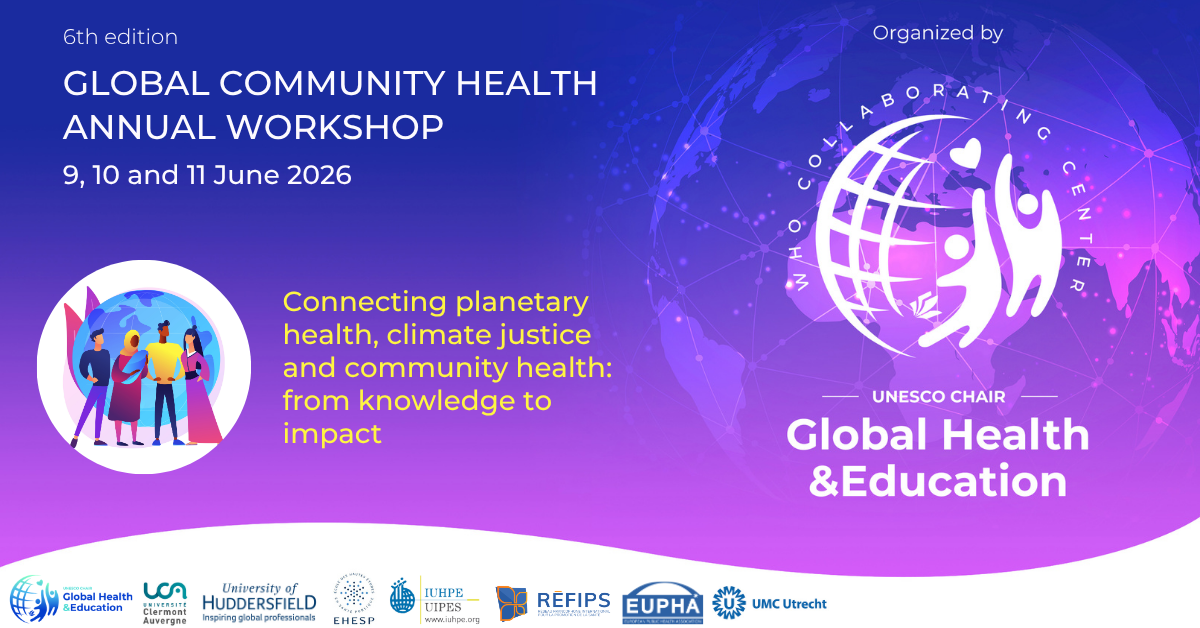
The 6th edition of the Global Community Health Workshop, held in June 2026, was a great success. This year’s workshop theme was ‘Connecting planetary health, climate justice, and community health: from knowledge to impact’.

This year’s workshop invited participants to explore the links between planetary health and community health and wellbeing. We looked into mobilizing communities, including the involvement of young people, as agents of change, ensuring that climate solutions are just, accessible, and impactful taking into account indigenous perspectives. By bridging knowledge with action, we inspired collaborative strategies that address the root causes of environmental degradation while fostering healthier, more resilient communities. The workshop was organised in collaboration with the University of Clermont Auvergne, University of Huddersfield, EHESP School of Public Health, International Union for Health Promotion and Education (IUHPE), Réseau Francophone International Pour la Promotion de la Sante (RÉFIPS), European Public Health Association (EUPHA) and Julius Center for Health Sciences and Primary Care, UMC Utrecht.

All presentations and recordings of the lectures are available on our website as well as recommended readings from the speakers.

Early 2027 the theme and dates of the 7th edition of the Global Community Health Workshop will be announced.

Posted by Didier in News