Month: May 2025

5th edition Global Community Health Annual Workshop – Confirmed speakers

5th edition Global Community Health Annual Workshop – Confirmed speakers

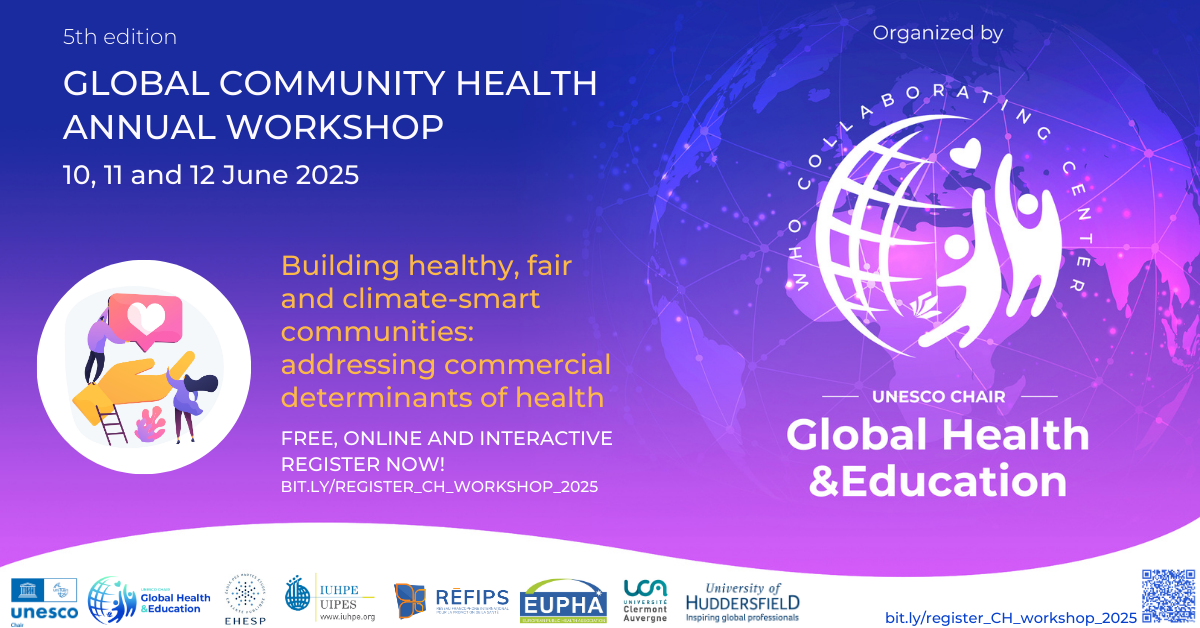
On 10, 11 and 12 June 2025 the 5th edition of the Global Community Health Annual Workshop will take place as an online event. This year’s workshop theme is ‘Building healthy, fair and climate-smart communities: addressing commercial determinants of health’.

During the workshop the focus will be on the impact of the commercial determinants of health on community health and how public health actions can respond to them. Different initiatives with a special focus on participatory methods will be explored looking at conflict of interests and possible co-benefits of private sector action for better health on the community level. This will also be the capacity building focus for the participants.

The Global Community Health Annual Workshop provides a space where community health and health promotion practitioners and policy makers can improve their skills and where researchers can gain in capacities to conduct community-based participatory research.

Speakers

We are honoured to have excellent contributors from all over the world. A preview of the contributors:

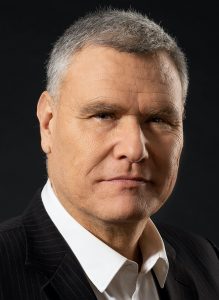
  • Prof. Ilona Kickbusch PhD– Director and chair of the Global Health Centre, Graduate Institute of International and Development Studies, Geneva, Switzerland
  • Prof. Jason Corburn – University of California, Berkeley, Center for Global Healthy Cities, USA
  • Raúl Mercer – MD MSc, Coordinator of the Program of Social Sciences and Health, FLACSO, Argentina
  • Mariela Alderete – MD, Researcher, Program of Social Sciences and Health, FLACSO, Argentina
  • Nancy Neamtan – Former CEO of the Chantier de l’économie sociale, Canada
  • Prof. Alafia Samuels – Caribbean Institute for Health Research, University of the West Indies, Mona, Kingston, Jamaica
  • Khanitta Saeiew – National Health Commission Office (NHCO), Thailand 
  • Tanguy Bognon – Volunteer, Responsible of Monitoring, evaluation, accountability and learning at HIA, Health Access Initiative (HAI), Benin
  • Giulia Gasparri – Consultant

Format of the workshop

The global workshop will run during 3 days, 3,5 contact hours per day. To accommodate participants from all different time zones around the world, the workshop will be offered twice a day.

  • Block 1 will run from 10.00 – 13.30 Paris; 16.00 – 19.30 Beijing; 18.00 – 21.30 Melbourne.
  • Block 2 will run from 16.00 – 19.30 Paris; 7.00 – 10.30 Los Angeles; 11.00 – 14.30 Buenos Aires

It uses an interactive format ensuring active participation through a series of online lectures, combined with community heath hubs.

Community health hubs

These community health hubs (smaller working groups) acknowledge our diversity and cultural dimensions and are offered in different languages including English, French, Spanish and other languages depending on the availability of facilitators. During the community health hubs participants have the opportunity to share experiences, build their regional and global networks and work on their individual assignments.

We encourage participants to gather locally and organise their own local community health hubs. They can follow the central lectures online together and then continue their discussions live in the local community health hubs.

Assignment

Participants will be asked to submit an individual assignment, which can be a reflexion on their main learnings of the CHW or a description of a community health initiative they are involved in or know of. Each assignment will be assessed and published on the Chair website, for future reference. After approval of the assignment participants will receive a certificate of attendance.

Language

The online lectures are held in the English and French language. This year we will provide translation into 50+ languages, including English, French, Spanish, Persian, Arabic and Chinese. We will use a translation app based on AI during the plenary sessions.

Registration

This interactive workshop will take place online and is free of charge. Practitioners, students, policy makers and researcher from different backgrounds from all over the world are welcome to join. You can register by completing the online registration form. Registration will close on Tuesday 3 June 2025, 16.00 CEST.

Organisers

Organisers are the UNESCO Chair Global Health & EducationEHESP School of Public HealthInternational Union for Health Promotion and Education (IUHPE)Réseau Francophone International Pour la Promotion de la Sante (RÉFIPS)European Public Health Association (EUPHA)University of Clermont Auvergne and Huddersfield University.

For more information about the workshop, please visit the dedicated webpage.
Posted by Didier in News
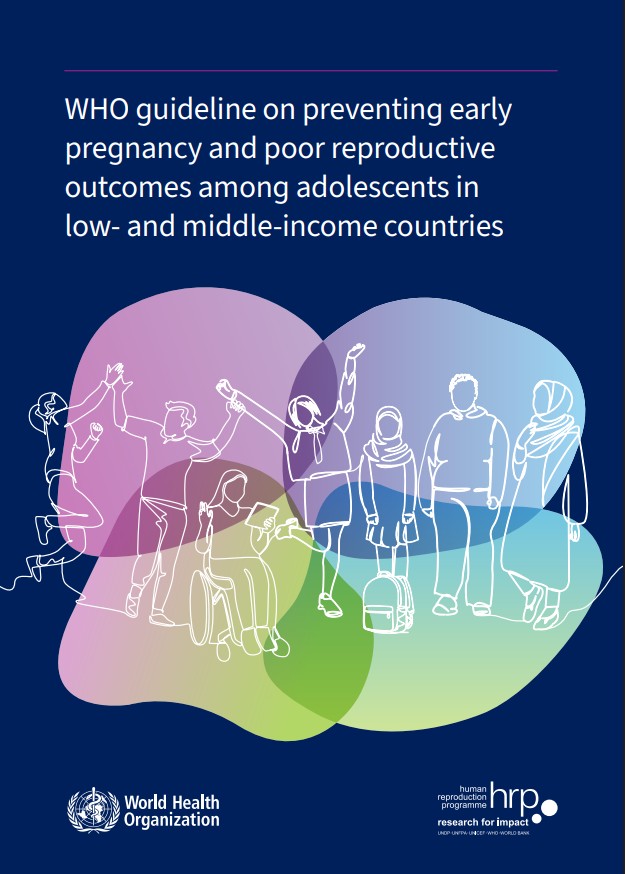
WHO guideline on preventing early pregnancy and poor reproductive outcomes among adolescents in low- and middle-income countries

WHO guideline on preventing early pregnancy and poor reproductive outcomes among adolescents in low- and middle-income countries

WHO launched the new WHO Guideline “Preventing early pregnancy and poor reproductive outcomes among adolescents in low- and middle-income countries”.

Adolescent pregnancy and child marriage are intertwined issues that hinder the realisation of sexual and reproductive health and rights of adolescents, and particularly of adolescent girls. Recent data show that first births to girls aged 17 years and younger, in 54 developing countries with data, occur within marriage or cohabiting unions.

Adolescent pregnancy remains a critical global issue, especially in low- and middle-income countries, where 21 million girls aged 15–19 become pregnant each year, half unintentionally. Child marriage, restrictive societal gender norms and stereotypes, and limited access to education and employment perpetuate cycles of early marriage and childbearing. 

Access to sexual and reproductive health services and comprehensive sexuality education remains limited. Many adolescents lack essential information on puberty, contraception, and sexual health. Barriers such as stigma, legal restrictions, and provider biases hinder access to contraception, with persistent inequities across regions and groups. 

The objectives of this guideline are the same as those of the 2011 edition, namely to provide evidence-based normative guidance on interventions to improve adolescent morbidity and mortality by reducing the chances of early pregnancy and its resulting poor health outcomes. The specific objectives of the guideline were to:

  1. identify effective interventions to prevent early pregnancy by influencing factors such as early marriage, coerced sex, unsafe abortion, access to contraceptives and access to maternal health services by adolescents; and
  2. provide an analytical framework for policy-makers and programme managers to use when selecting evidence-based interventions to prevent early pregnancy and negative health outcomes when they occur that are most appropriate for the needs of their countries and context.

The recommendations and best practice statements described in this document aim to enable evidence-based decision-making with respect to preventing early pregnancy and poor reproductive outcomes among adolescents in low- and middle-income country contexts.

You can find the recording of the guideline launch webinar here, access to the guideline in English here, and the executive summary in French here and Spanish here.

Posted by Didier in News
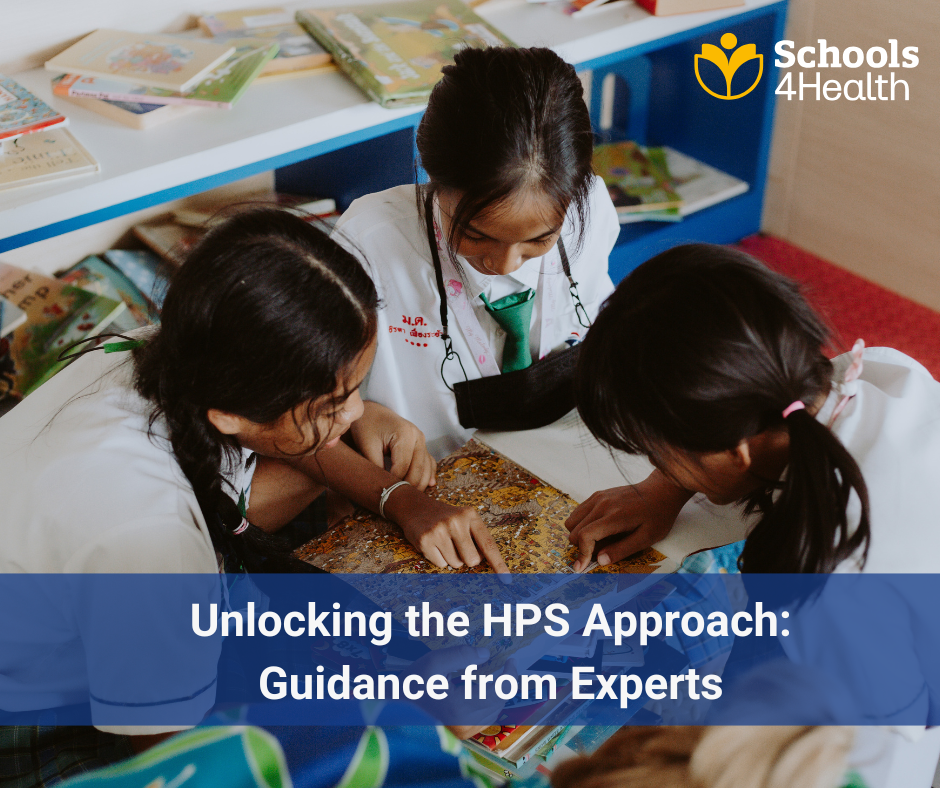
Why Schools Should Prioritise Health: Expert Voices from the Schools4Health Initiative

Why Schools Should Prioritise Health: Expert Voices from the Schools4Health Initiative

What makes the Health Promoting School (HPS) approach so essential today? Why should both policymakers and schools invest in it—and how does it help promote core European values like participation, equity, and inclusion? As part of the Schools4Health initiative, partners sat down with leading experts in education and public health to explore these questions and more, delving into what it takes to successfully implement the HPS approach and how projects like Schools4Health can support broader efforts led by organisations such as the WHO.

These are some of the questions the Schools4Health initiative is exploring as part of its mission to embed the Health Promoting School (HPS) approach into education systems across Europe. As part of this effort, partners recently invited two leading experts in education and public health to share their views on why now is the time to integrate health into the very fabric of school life.

From mental wellbeing and physical activity to healthy nutrition, health affects every aspect of a young person’s ability to learn and thrive. And yet, despite mounting evidence, many school systems continue to treat health as an add-on rather than a core condition for learning and development.

In a series of exclusive interviews recorded at the Schools4Health consortium meeting, advisory board members Professor Peter Paulus (Leuphana University Lüneburg) and Trinette Lee (WHO) reflect on the urgent need to rethink how we structure education and how a shift to the HPS model can lead to better outcomes not just for students and teachers, but for society.

The interviews kick off a new video series exploring the role of health in education through the eyes of those shaping policy and practice at the highest level.

Curious about their insights? Watch the first video on our LinkedIn page and follow Schools4Health on LinkedIn to explore the series to learn how schools can become healthier, more inclusive places to grow and learn.

For more insights on the HPS approach, discover the new Schools4Health policy brief, Why Invest in Health Promoting Schools, which outlines why it is a crucial and cost-effective strategy to create healthier learning environments.

Learn more at www.schools4health.eu

Posted by Didier in News