WHO

Global Forum of WHO Collaborating Centres, Lyon, 7–9 April 2026

Global Forum of WHO Collaborating Centres, Lyon, 7–9 April 2026

From 7 to 9 April 2026, Lyon hosted the first Global Forum of WHO Collaborating Centres, with the theme ‘Collaborating for a Healthier Future’, alongside the One Health Summit 2026 and bringing together global experts from hundreds of institutions designated as WHO Collaborating Centres across more than 80 countries. This Forum aims to strengthen the scientific and technical contribution of these centres to the WHO’s Fourteenth General Programme of Work (GPW 14) and the “Health for All” agenda.

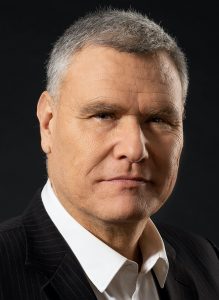
During a session dedicated to the role of Collaborating Centres, the WHO Regional Director for Europe, Hans Kluge, and Didier Jourdan, Head of the FR-135 Collaborating Centre and holder of the UNESCO Chair Global Health & Education, spoke jointly. Hans Kluge set out the strategic framework for the European Region, emphasising the need for strong networks of Collaborating Centres to support countries in the context of multiple crises.

Didier Jourdan illustrated this framework based on the experience of WHO Collaborating Centres, highlighting three key developments for the network:

  • moving from scattered initiatives to genuine work programmes aligned with EPW2 and GPW 14;
  • strengthening links with the WHO Academy to roll out evidence-based training on a large scale; and
  • using health education and literacy as a structural response to the crisis of mistrust in science and institutions.

Together, they championed the idea of Collaborating Centres conceived not only as ‘centres of excellence’, but as interconnected ‘centres of capacity’, serving education systems, health professionals and communities.
Read the presentation of Professor Didier Jourdan

Posted by Didier in News
Putting community engagement at the heart of action: WHO global curriculum guide for community health workers

Putting community engagement at the heart of action: WHO global curriculum guide for community health workers

The WHO has published a global reference guide for the training of community health workers. This competency-based curriculum provides a comprehensive framework for designing or adapting training programmes, incorporating core modules (home visits, community mobilisation, data collection, ethics) and specific modules (maternal and child health, chronic diseases, mental health, WASH, emergencies), with a view to strengthening the quality of primary care and universal health coverage.

This guide, designed for government departments, training institutions and frontline teams, helps to clarify the roles of community health professionals, to integrate scientific knowledge, professional expertise and the experiential knowledge of communities, and to address the social and economic determinants of health with a view to promoting health and reducing inequalities.

The guide is freely available on the WHO website.

Posted by Didier in News
Governments across Europe and Central Asia adopt new WHO strategy to give every child a healthy start in life

Governments across Europe and Central Asia adopt new WHO strategy to give every child a healthy start in life

Source: WHO

All 53 Member States of the WHO European Region have unanimously adopted a bold new strategy to improve the health and well-being of children and adolescents across Europe and Central Asia.

Titled A healthy start for a healthy life: a strategy for child and adolescent health and well-being in the WHO European Region 2026–2030”, and developed jointly with the United Nations Children’s Fund (UNICEF), the framework sets a clear vision for a region where every child and adolescent can grow, learn and thrive in good health – physically, mentally and socially.

Adopted at the 75th session of the WHO Regional Committee for Europe in Copenhagen, the strategy is the result of extensive consultation with governments, experts, civil society and young people themselves. It aims to tackle long-standing inequities in child and adolescent health and to respond to new challenges – from mental health and digital risks to the impacts of poverty, climate change and conflict on young lives.

The new strategy calls on countries to strengthen health systems and social policies that support children and families from the very beginning. It also emphasizes the importance of protecting children from harm, including exposure to violence, commercial exploitation, unhealthy products and the potential negative effects of social media. The strategy urges countries to act decisively on several fronts:

  • Participation and empowerment
  • Health equity and inclusion
  • Mental health
  • Health promoting schools
  • Safe and supportive environments
  • Digital well-being

As a WHO Collaborating Center for Reseach in Education and Health the Chair has provided input for the new strategy as well as the underlying evidence.

More information on the WHO website

Posted by Didier in News
Recording available first webinar in series on future-proofing child and adolescent health in Europe and Central Asia 

Recording available first webinar in series on future-proofing child and adolescent health in Europe and Central Asia 

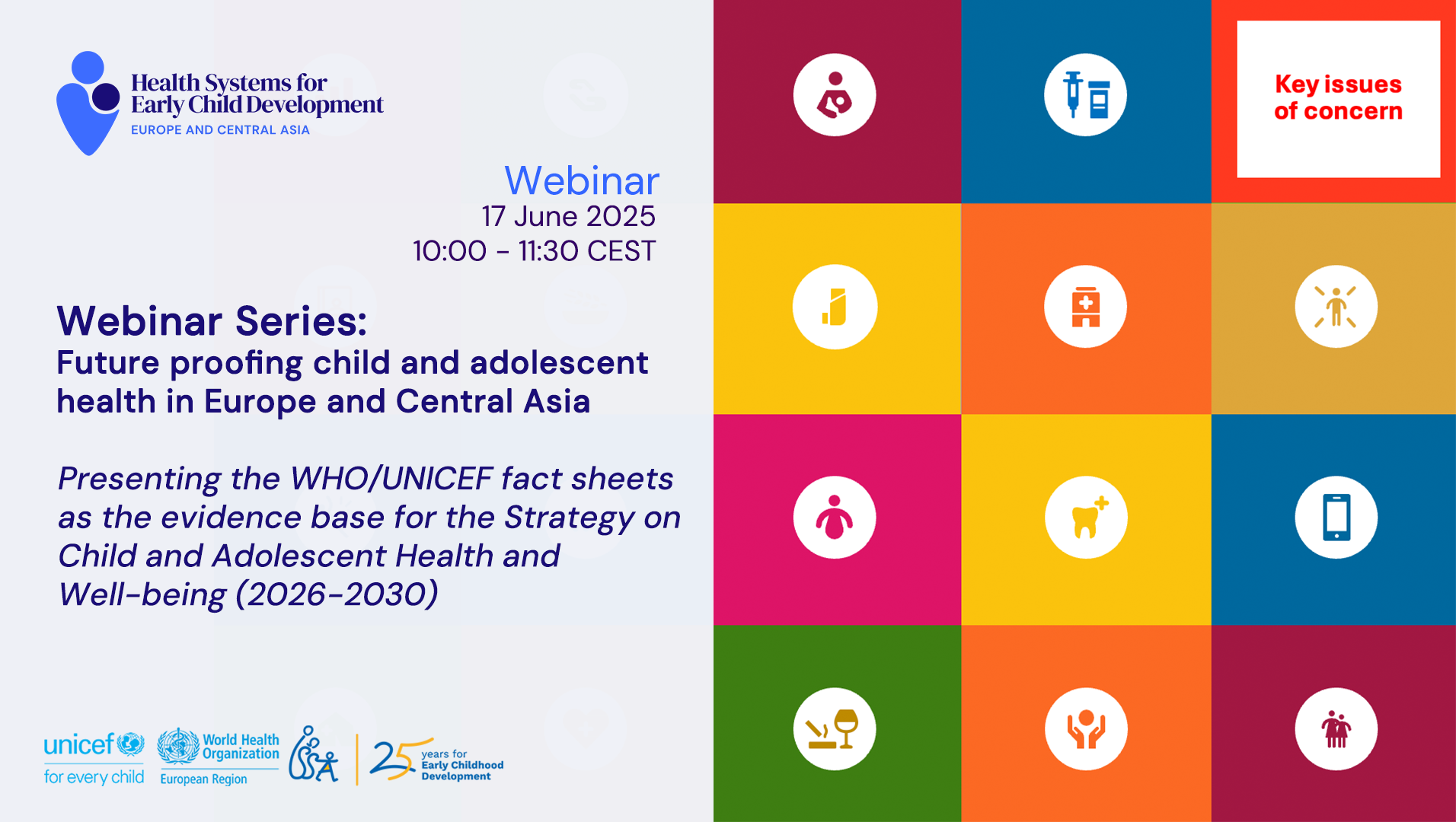
The first webinar in the webinar series on future-proofing child and adolescent health took place on 17 June 2025.
The webinar presented key findings from the new WHO/UNICEF fact sheets, which highlight urgent trends and emerging priorities for child and adolescent health and well-being in Europe and Central Asia. These evidence-based insights are informing the development of the forthcoming Regional Strategy on Child and Adolescent Health and Well-being (2026–2030).

In case you missed it—or would like to revisit the discussion—the full recording of the webinar is now available in English and Russian on the Health Systems for Early Childhood Development YouTube channel.

🎥 Watch the webinar here
🔎 You may view the PowerPoint slides here
💡 View the WHO/UNICEF fact sheets here

Upcoming webinars

The conversation continues with the next two webinars in the series:

  • Thursday 10 July, 10.00 CEST — A healthy start for a healthy life: orientation on the forth-coming WHO/UNICEF strategy for child and adolescent health and wellbeing in the European Region, and experiences from countries tackling child and adolescent health challenges 
  • Tuesday 16 September, 10.00 CEST — Implementation challenges and approaches

This webinar is organised by UNICEF Regional Office for Europe and Central Asia (ECARO), WHO Regional Office for Europe (WHO/Europe), and the International Step by Step Association (ISSA) under the auspices of the Health Systems for Early Childhood Development initiative. 

Posted by Didier in News
WHO guideline on preventing early pregnancy and poor reproductive outcomes among adolescents in low- and middle-income countries

WHO guideline on preventing early pregnancy and poor reproductive outcomes among adolescents in low- and middle-income countries

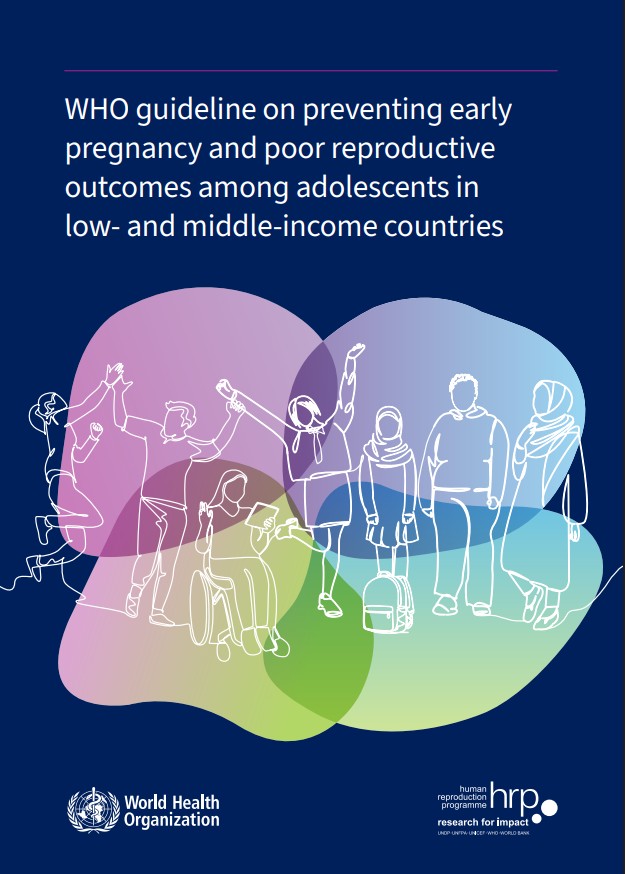
WHO launched the new WHO Guideline “Preventing early pregnancy and poor reproductive outcomes among adolescents in low- and middle-income countries”.

Adolescent pregnancy and child marriage are intertwined issues that hinder the realisation of sexual and reproductive health and rights of adolescents, and particularly of adolescent girls. Recent data show that first births to girls aged 17 years and younger, in 54 developing countries with data, occur within marriage or cohabiting unions.

Adolescent pregnancy remains a critical global issue, especially in low- and middle-income countries, where 21 million girls aged 15–19 become pregnant each year, half unintentionally. Child marriage, restrictive societal gender norms and stereotypes, and limited access to education and employment perpetuate cycles of early marriage and childbearing. 

Access to sexual and reproductive health services and comprehensive sexuality education remains limited. Many adolescents lack essential information on puberty, contraception, and sexual health. Barriers such as stigma, legal restrictions, and provider biases hinder access to contraception, with persistent inequities across regions and groups. 

The objectives of this guideline are the same as those of the 2011 edition, namely to provide evidence-based normative guidance on interventions to improve adolescent morbidity and mortality by reducing the chances of early pregnancy and its resulting poor health outcomes. The specific objectives of the guideline were to:

  1. identify effective interventions to prevent early pregnancy by influencing factors such as early marriage, coerced sex, unsafe abortion, access to contraceptives and access to maternal health services by adolescents; and
  2. provide an analytical framework for policy-makers and programme managers to use when selecting evidence-based interventions to prevent early pregnancy and negative health outcomes when they occur that are most appropriate for the needs of their countries and context.

The recommendations and best practice statements described in this document aim to enable evidence-based decision-making with respect to preventing early pregnancy and poor reproductive outcomes among adolescents in low- and middle-income country contexts.

You can find the recording of the guideline launch webinar here, access to the guideline in English here, and the executive summary in French here and Spanish here.

Posted by Didier in News
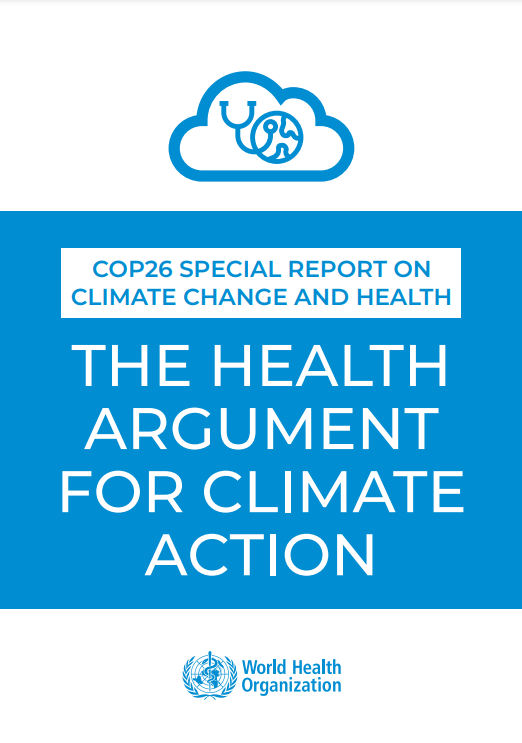
Publication: COP26 special report on climate change and health: the health argument for climate action

Publication: COP26 special report on climate change and health: the health argument for climate action

Ahead of the COP26 WHO published the report “COP26 special report on climate change and health: the health argument for climate action”. The 10 recommendations in the COP26 Special Report on Climate Change and Health propose a set of priority actions from the global health community to governments and policy makers, calling on them to act with urgency on the current climate and health crises.

The recommendations were developed in consultation with over 150 organizations and 400 experts and health professionals. They are intended to inform governments and other stakeholders ahead of the 26th Conference of the Parties (COP26) of the United Nations Framework Convention on Climate Change (UNFCCC) and to highlight various opportunities for governments to prioritize health and equity in the international climate movement and sustainable development agenda. Each recommendation comes with a selection of resources and case studies to help inspire and guide policymakers and practitioners in implementing the suggested solutions.

The 10 recommendations on climate change and health:

  1. Commit to a healthy recovery.
  2. Our health is not negotiable.
  3. Harness the health benefits of climate action.
  4. Build health resilience to climate risks.
  5. Create energy systems that protect and improve climate and health.
  6. Reimagine urban environments, transport, and mobility.
  7. Protect and restore nature as the foundation of our health.
  8. Promote healthy, sustainable, and resilient food systems.
  9. Finance a healthier, fairer, and greener future to save lives.
  10. Listen to the health community and prescribe urgent climate action.

Access to the full report.

Posted by Didier in News