Month: November 2026

EuroHealthNet Policy Lab: Strengthening child health and wellbeing through the European Child Guarantee – 20 November

EuroHealthNet Policy Lab: Strengthening child health and wellbeing through the European Child Guarantee – 20 November

Children’s health and wellbeing are closely linked to the social and economic conditions they grow up in. Poverty and social exclusion can create barriers to health services, healthy food, adequate housing and living conditions, early childhood education and care, and other essentials for children’s development and long-term health. Addressing these inequalities requires action across sectors and throughout childhood, with particular attention to children and families experiencing the greatest disadvantages.

The European Child Guarantee provides an important framework for action. Established to ensure that children at risk of poverty or social exclusion have effective access to key services – notably, free early childhood education and care; free education (including school-based activities and at least one healthy meal each school day); free healthcare; healthy nutrition and adequate housing. In this regard, the Guarantee aims to provide a mechanism for strengthening coordination between sectors, policy areas and levels of government, while encouraging Member States to identify and address barriers to access.

Online Policy Lab

The policy lab will take place online on Friday, 20 November, from 10:30 to 12:00 CET. The Policy Lab will explore how the European Child Guarantee can be strengthened, used and implemented as a framework for improving child health and wellbeing. It will:

  • Explore the European perspective on how the Child Guarantee can contribute to improving children’s health and wellbeing, drawing on evidence and insights from international organisations;
  • Reflect on national experiences of implementation, including how countries are using the Child Guarantee to strengthen policies, services and cross-sectoral action; and
  • Examine how the strengthened framework can accelerate action for children’s health towards 2030.

Goof Buijs, manager of the UNESCO Chair Global Health & Education is one of the speakers.

More information and registration

For the full agenda and registration, please visit the EuroHealthNet webpage.
Posted by Didier in News
Education Beyond 2030 consultation – Equity, Well-being and changing learner populations – 16 November

Education Beyond 2030 consultation – Equity, Well-being and changing learner populations – 16 November

As the global education community looks beyond the 2030 Agenda, the SDG 4 High-Level Steering Committee (HLSC), supported by UNESCO, is leading a global consultation process to help shape a shared vision for education beyond 2030. 

The Education Beyond 2030 Foresight Thematic Consultations are part of these broader global consultations and contribute to the Education Beyond 2030 foresight exercise. They bring together stakeholders to explore the trends, opportunities, uncertainties and risks that may shape education between now and 2045, and to discuss their implications for future education policy, systems and learning. 

These consultations are designed as interactive exchanges rather than webinar-style presentations. Participants will be invited to contribute their perspectives, ideas and recommendations through a digital engagement platform, helping to shape the discussions and inform the foresight exercise. 

The Foresight Thematic Consultations are open to all interested participants and will help inform discussions on the future global education agenda beyond 2030. 

Consultation themes

The five thematic consultations have been developed based on findings from the first round of the foresight pulse survey. Together, they cover a range of interconnected trends expected to have a significant impact on the future of education. 

  • Education in an Era of Climate Change, Conflict and Uncertainty
  • Equity, Well-being and Changing Learner Populations
  • Financing, Governing and Delivering Education Transformation
  • Skills and Learning in Changing Economies and Societies
  • Artificial Intelligence, Digital Transformation and Emerging Technologies in Education

Equity, Well-being and Changing Learner Populations 

This consultation considers how inequalities, mental health pressures, demographic change, migration and displacement may reshape educational participation, experiences and outcomes, and how systems can evolve to support diverse learners and prevent new and persistent forms of exclusion. 

Online consultation on 16th November, 14.00 – 16.00 CET

Languages: English and Spanish

Registration

For more information (also about the other consultation themes), including the concept note, and to register please go to the UNESCO website.

Posted by Didier in News
UNESCO Member State dialogue – Every learner safe and well: from promise to practice

UNESCO Member State dialogue – Every learner safe and well: from promise to practice

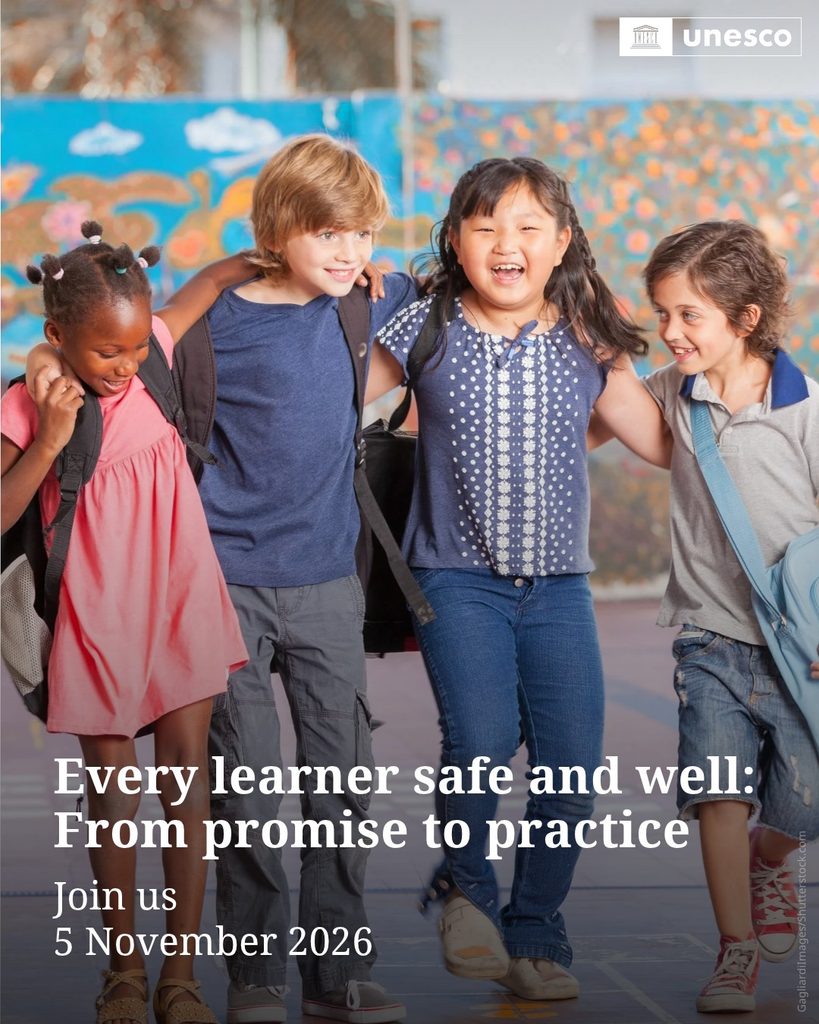
On 5 November 2026, from 13.30 pm to 15.30 pm (CET), UNESCO, in collaboration with the Permanent Delegations of Ireland and Mexico, is organising a dialogue on the protection, mental health and well-being of learners.

Entitled ‘For the protection and well-being of every learner: from promise to reality’, this meeting will provide an opportunity to share Member States’ experiences and explore policies and actions to prevent violence and bullying in educational settings, support mental health and promote safe, inclusive learning environments that foster the well-being of all.

Organised in a hybrid format, this event will also highlight UNESCO’s role in supporting education systems on these issues.

Practical information

Date: Thursday 5 November 2026, from 1.30 pm to 3.30 pm (Paris time)
Format: Hybrid – UNESCO Headquarters, Paris (Room IX), and online
Languages: French, English and Spanish, with simultaneous interpretation

As in-person attendance is reserved primarily for Permanent Delegations, other participants are invited to follow the proceedings online.

Register for the Zoom webinar

Posted by Didier in News
Nigerian launch event UNESCO Chair on Global Health & Education – resources available

Nigerian launch event UNESCO Chair on Global Health & Education – resources available

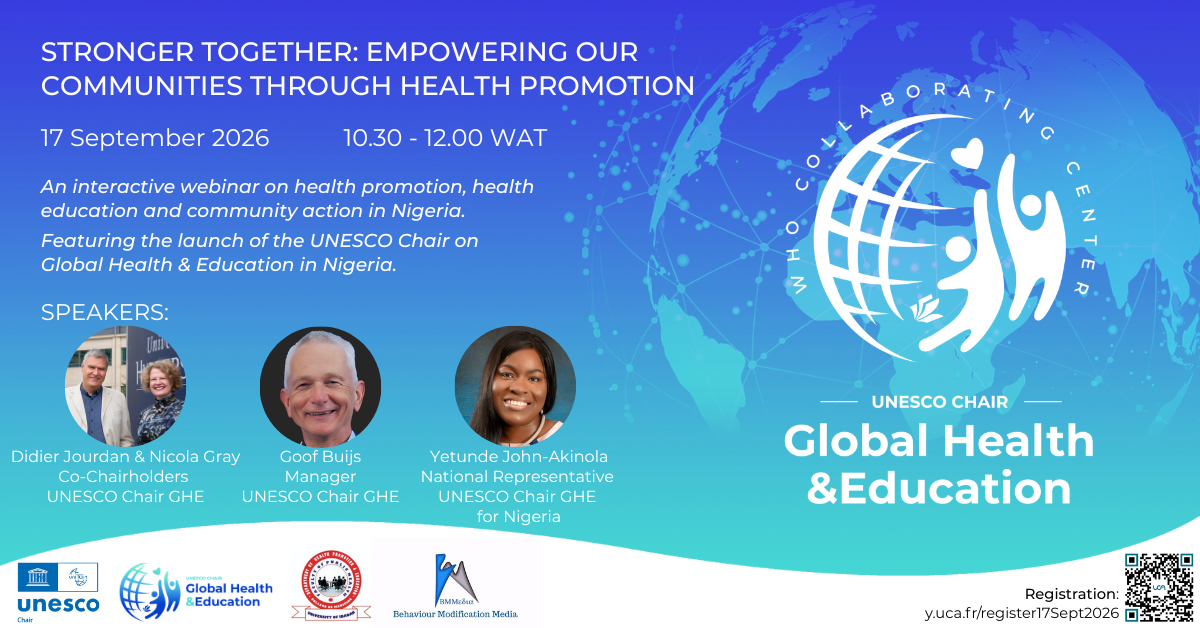
The webinar “Stronger together: empowering our communities through health promotion” took place on 17 September 2026. The interactive webinar on health promotion, health education and community action in Nigeria featured the launch of the UNESCO Chair on Global Health & Education in Nigeria.

The main aim for this webinar was to introduce the UNESCO Chair on Global Health & Education and highlight the work of the team in Nigeria. The webinar was organised in collaboration with the Department of Health Promotion and Education, Faculty of Public Health, College of Medicine, University of Ibadan and Behaviour Modification Media.

Resources

Watch the recording of the webinar:

See the presentation:

Programme

Yetunde O. John-Akinola is a senior lecturer and researcher at the Department of Health Promotion and Education, Faculty of Public Health, College of Medicine, University of Ibadan. She is the National representative of Nigeria of the UNESCO Chair on Global Health & Education. She has more than fifteen years’ experience as a researcher working with both non-governmental and academic research groups. She has been involved in various researches including school health, child and adolescent health, NCDs prevention, HIV/AIDS and women’s health. Her focus encompasses child participation in the research process and children’s participation in school, health behaviour of adolescents and young people, adolescent and young people’s health and wellbeing and parents’ participation in school. 


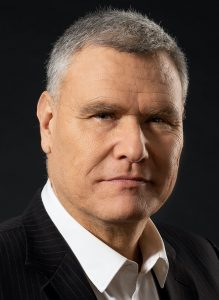
Didier Jourdan
 is the co-chair holder of the UNESCO Chair on Global Health & Education and the head of the WHO Collaborating Centre n Global Health & Education. He is a Professor of Education Sciences, former Director of the ESPE and Vice-President of Clermont Auvergne University (France). He has served as Chair of the Prevention Commission of the High Council for Public Health in France and as Director of Prevention at the National Public Health Agency. Didier Jourdan is Vice-President of the IUHPE (International Union for Health Promotion and Education) and a member of the Governing Board of the IITE (UNESCO Institute for Information Technologies in Education).

Nicola Gray is the co-chair holder of the UNESCO Chair on Global Health & Education. She is a Reader in Medicines and Health at the University of Huddersfield, UK. Registered as a pharmacist in 1991, she has worked in hospital, community and academic practice. She is a Trustee of the UK Association for Young People’s Health and Vice-President for Europe of the International Association for Adolescent Health. She has published a number of papers and opinion pieces regarding young people’s health, health literacy, the safe reopening of schools during the COVID-19 pandemic, and the challenges for children and young people living with non-communicable diseases (NCDs).

Goof Buijs is the manager of the UNESCO Chair on Global Health & Education. After finishing his Master study in Human Nutrition his first job was teaching health science at the Amsterdam teacher trainer institute. At the Netherlands Institute for Health Promotion NIGZ he specialized in school health promotion, by introducing the national health promoting school programme in the Netherlands and leading several European projects including managing the Schools for Health in Europe (SHE) network from 2007 until 2017. His specialisation is bringing health and education sectors together. He is an experienced networker, expert in co-creation, trainer, and organizer of local and global events. He supports cooperation among people, focusing on everyone’s talents and uniqueness. He is an environmental activist for most of his life.

Yetunde O. John-Akinola is a senior lecturer and researcher at the Department of Health Promotion and Education, Faculty of Public Health, College of Medicine, University of Ibadan. She is the National representative of Nigeria of the UNESCO Chair on Global Health & Education. She has more than fifteen years’ experience as a researcher working with both non-governmental and academic research groups. She has been involved in various researches including school health, child and adolescent health, NCDs prevention, HIV/AIDS and women’s health. Her focus encompasses child participation in the research process and children’s participation in school, health behaviour of adolescents and young people, adolescent and young people’s health and wellbeing and parents’ participation in school. 

Tomiwa Akinsanya is a results-driven project manager and digital health professional with nearly a decade of experience leveraging digital technologies and an applied behavioral science approach to improve health outcomes for children, young people, and mothers across Sub-Saharan Africa. With a Master’s degree in Public Health, she has led and delivered high-impact digital health initiatives that strengthen access, financing, and service delivery in underserved settings. Tomiwa was an active member of the UNESCO Chair Global Health & Education (GHE) Young Professionals Editorial Group, contributing to the writing committee for the UNESCO Chair publication, Nothing About Them Without Them: Children and Young People’s Participation in Health Promotion – A Global Collection of Case Studies. She currently serves as the youth representative on the UNESCO Chair GHE GPOD Young Professionals Advisory Board and the UNESCO Chair GHE Youth Panel.

Halimat Omowumi Olaniyan’s experience spans public health, youth development, disability inclusion, digital health and social impact, with work across academic institutions, civil society organisations, communities and youth-led networks. Program and project management professional with experience coordinating research, capacity-building, and community-based projects across Nigeria. Skilled in managing project activities and teams, coordinating stakeholder consultations and meetings, organizing training and convenings, supporting grant development, preparing financial and progress reports, and translating evidence into publications, presentations, and other knowledge products. Halimat was an active member of the UNESCO Chair Global Health & Education (GHE) Young Professionals Editorial Group, contributing to the writing committee for the UNESCO Chair publication, Nothing About Them Without Them: Children and Young People’s Participation in Health Promotion – A Global Collection of Case Studies. She currently serves as youth representative on the UNESCO Chair GHE Youth Panel.

Dr. Adesola Olumide is a Researcher and Consultant Community Physician at the Institute of Child Health (ICH), University of Ibadan and University College Hospital, Nigeria. She is the International Association of Adolescent Health (IAAH) Vice President for the Sub-Sahara Africa Region and a member of the Steering Committee of the UNESCO Chair Global Health & Education. Adesola coordinated the Adolescent Health component of the MPH programme in Child and Adolescent Health (CAH) run by ICH from 2008 to 2017. From 2014 to 2017, she coordinated the ICH Infant Welfare/ Well-child, and was Acting Director of the Institute from 2017 – 2019. Over the course of her career, Adesola has served as investigator on a number of projects. Currently, she is the Director of the College of Medicine, Research and Innovation Management (CRIM) unit. She is also the current Secretary General for the Society for Adolescent and Young People’s Health in Nigeria (SAYPHIN). She has a keen interest in mentoring of junior colleagues and her research interests have expanded to include utilization of research findings to develop and implement evidence-based interventions to address problems of adolescents and young people.

Yetunde Adenike Oguntokun is Principal Partner at Behaviour Modification Media. She holds a Master’s degree in Psychology, with specialised training in Clinical Psychology, and has further training in Health Promotion through various courses and workshops. She is a creative health communicator who integrates her background in behavioural health with storytelling to translate complex health concepts into clear, engaging, and relatable messages. Her work focuses on using innovative, story-driven approaches to strengthen health awareness, support behaviour change, and enhance community engagement in public health. She is a member of the UNESCO Chair Global Health & Education, Colostrum International Breastfeeding NGO, International Union for Health Promotion and Education (IUHPE), Society for Health Communication, and the Society for Theory and Research on Salutogenesis (STARS).


Posted by Didier in News