Month: November 2025

UNESCO IITE Publishes Briefs on Education for Health, Well-being, and Personality Development

UNESCO IITE Publishes Briefs on Education for Health, Well-being, and Personality Development

UNESCO’s Institute for Information Technologies in Education (IITE) has published the first two briefs in a series, titled How the Educational Environment and Curricula Contribute to Learners’ Personality Development, Health, and Well-being and “Teacher personality potential and well-being as drivers of learners’ personality development, health, and well-being“. These publications are part of the international initiative “Empowering through Education for Health and Well-being in a Learning Environment That Fosters Personality Development,” a collaboration between UNESCO IITE and the Investment in the Future Charitable Foundation which aims to advance teachers’ professional development.

Focus on holistic educational programs

The first brief “How the Educational Environment and Curricula Contribute to Learners’ Personality Development, Health, and Well-being” examines educational programs that prioritise different aspects of promoting health, psychosocial well-being, and the development of learners’ personality potential. It provides descriptions and analyses of these programs, offering insights for policymakers, education specialists, and school leaders at national, regional, and local levels as well as secondary school teachers and principals. The publication aims to support efforts to transform education to meet current challenges. This publication is available for download in Russian and English.

Focus on teachers’ well-being and job satisfaction

The second brief “Teacher personality potential and well-being as drivers of learners’ personality development, health, and well-being” explores personal and school-related factors that affect teachers’ well-being and job satisfaction and recommends diagnostic tools and support practices. Special attention is given to teachers’ personal and professional development, self-efficacy, and collective efficacy. The publication is available for download in: Russian and English.

For more information visit the UNESCO IITE website.
Posted by Didier in News
Planning for healthy and thriving learners: Global launch – 20 November 2025

Planning for healthy and thriving learners: Global launch – 20 November 2025

UNESCO is launching Planning for healthy and thriving learners – a coordinated programme of work to embed health and well-being into education sector planning.

Planning for healthy and thriving learners aims to translate high-level commitments into concrete action, placing learners’ health and well-being at the centre of education systems. It provides practical tools, builds capacity, and empowers education authorities to take the driving seat in mobilizing support and resources from other sectors.

Planning for healthy and thriving learners builds on UNESCO’s Strategy on Education for Health and Well-being and  the Making Every School a Health-Promoting School  initiative, and is advanced in collaboration with  the  Inter-Agency Group on School Health and Nutrition. 

The Chair is one of the contributors to the strategic resources for planning and policy-making. The briefing note, a high-level advocacy tool for decision-makers, and the Handbook on integrating health and well-being into education sector planning, which provides step-by-step guidance for ministries of education and partners across the sector planning cycle, from analysis and policy formulation to implementation and monitoring.

The launch welcomes education stakeholders, planners and partners. It is organized by UNESCO, including its Headquarters, International Institute for Capacity Building in Africa (IICBA), and Regional offices in Dakar and Harare, in partnership with the African Union (AU) and the Inter-Agency Group on School Health and Nutrition. You can register for the global webinar (hybrid) – connecting Addis Ababa with participants worldwide to showcase tools and country experiences, on 20 November 2025, afternoon.  Interpretation will be available in English, French and Portuguese for all sessions, with Spanish added for the webinar.

Posted by Didier in News
Honorary doctorate awarded to Professor Didier Jourdan

Honorary doctorate awarded to Professor Didier Jourdan

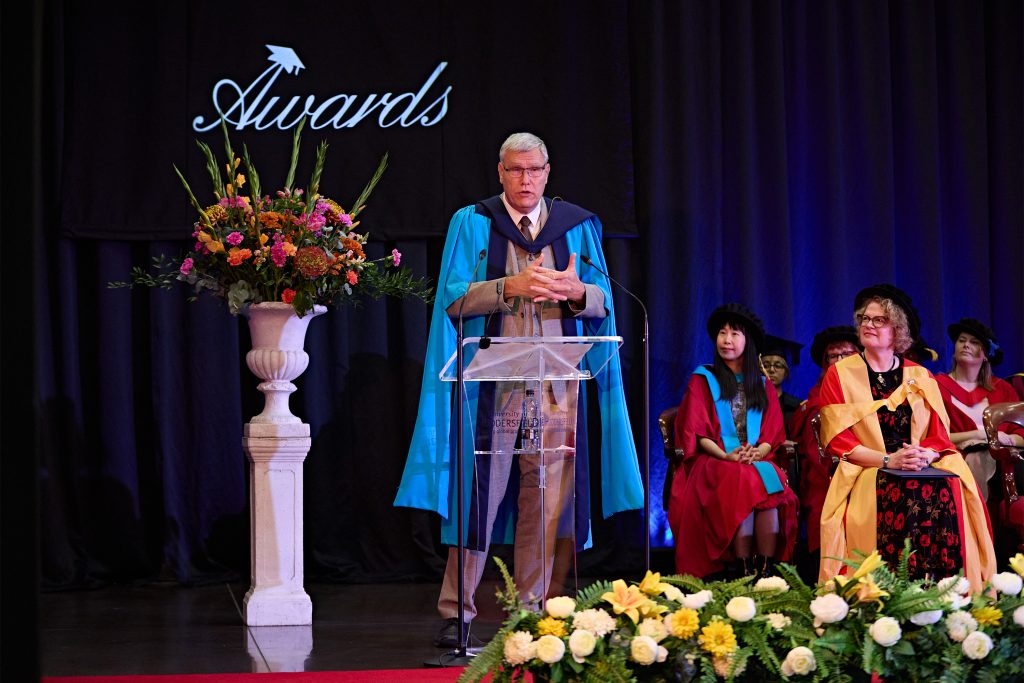
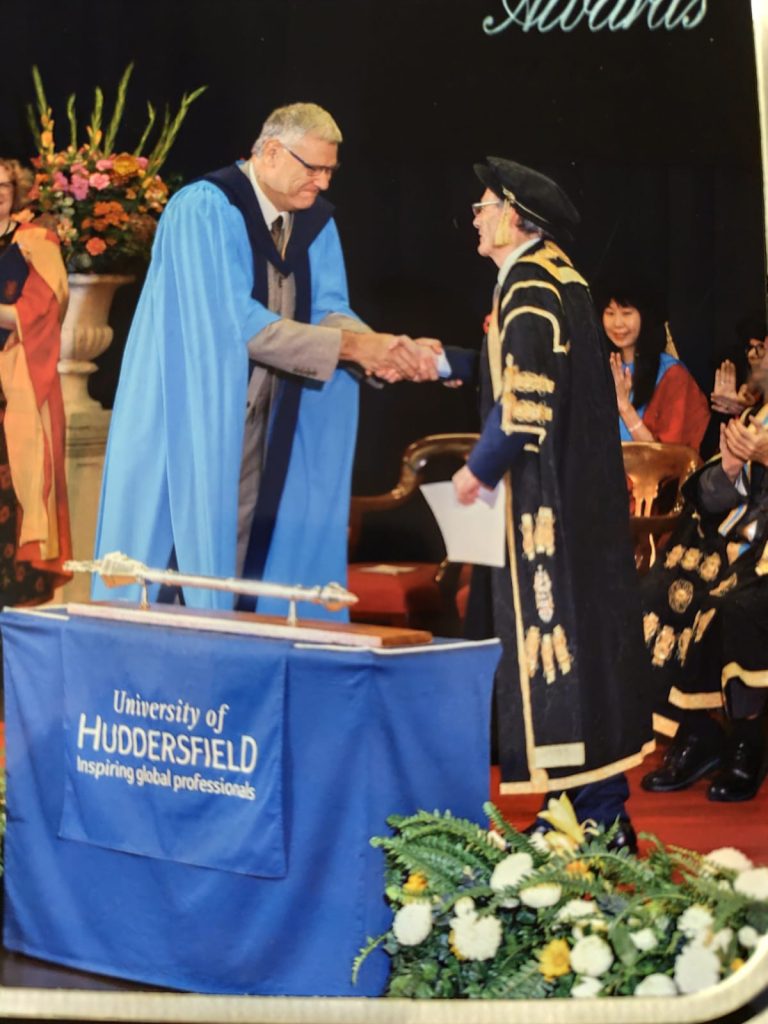
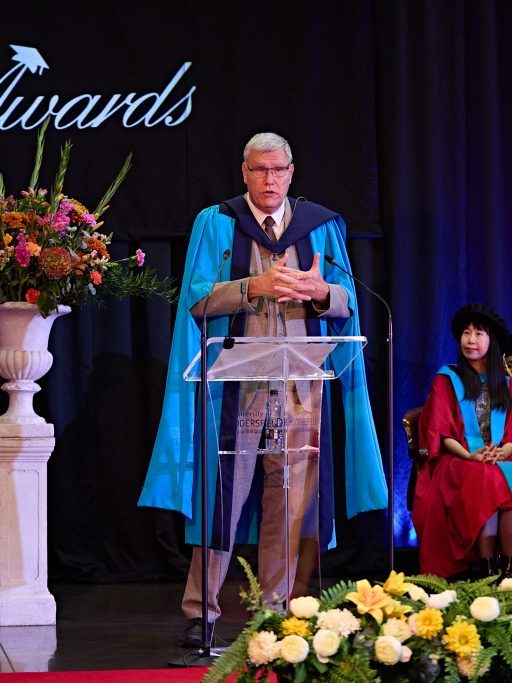
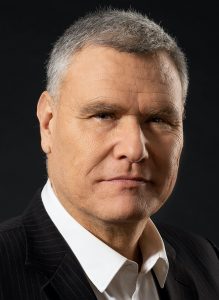
The University of Huddersfield (United Kingdom) has awarded an honorary doctorate to Professor Didier Jourdan, holder of the UNESCO Chair Global Health & Education and professor at University of Clermont Auvergne. This distinction honours his outstanding contribution to health promotion practice, education and research.

In addition to heading the UNESCO Chair, Professor Jourdan coordinates the WHO Collaborating Centre for Research in Education and Health, serves as Vice-President for Communication of the International Union for Health Promotion and Education (IUHPE), and advises numerous institutions around the world on health policies and innovations.

A researcher at the ACTé laboratory (EA 4285), he is the author of numerous scientific articles, books and contributions aimed at researchers and professionals in the fields of health, education and training. Recognised as an international expert in prevention and health education policies, he plays an active role in international collaborations focused on research, training and the implementation of evidence-based public health policies.

At the ceremony, the University of Huddersfield praised his outstanding commitment to improving the lives of students and teachers around the world and his work to promote lifelong learning for health. Professor Jourdan said he received this honour as “a celebration of a shared purpose“, recalling the close ties between the Universities of Huddersfield and Clermont Auvergne, co-hosts of the UNESCO Chair Global Health & Education, united by a joint belief that education and health are inextricably linked, and that both are essential to human flourishing.

Read the full article on the University of Huddersfield website: Pride as honorary doctorates bestowed at graduation – University of Huddersfield

The UNESCO Chair Global Health & Education extends its warmest congratulations to Professor Jourdan on this prestigious distinction, which recognises an exemplary career dedicated to bringing education and health closer together.

Posted by Didier in News
Vaud CMS mobilized to meet the challenge of aging well

Vaud CMS mobilized to meet the challenge of aging well

In the canton of Vaud (Switserland), more than 40,000 people benefit each year from the services provided by Community health and social care centres (CMS). Faced with growing and increasingly specific needs, the Association vaudoise d’aide et de soins à domicile (AVASAD) has been engaged since 2020 in an ambitious initiative, supported by the Leenaards Foundation and the UNESCO Chair Global Health & Education: the “Ageing Well” programme.

This programme marks a real cultural shift within the CMS: it aims to strengthen the skills of the teams while mobilising the senior citizens themselves, two essential levers for preserving autonomy and promoting home care.

Over three years, nearly 150 professionals have co-developed a unique training programme consisting of 26 podcast modules aimed primarily at care and community health assistants (ASSC), and two specific modules for other professional groups. These podcasts combine testimonials, scientific contributions, role-playing exercises, quizzes and additional resources. By 2025, more than 2,600 employees of the Vaud CMS will have completed this programme.

The results of the evaluation, conducted with the UNESCO Chair Global Health & Education, are significant: 64% of care and community health assistants believe that the training has enhanced their practices and improved their well-being at work, while 94% of managers say that the experience has enriched their managerial practice. The seniors themselves perceive a change as well: the willingness of CMS teams to actively collaborate with them rather than acting on their behalf. For many, ageing well means above all staying active, maintaining connections, staying informed and being able to make decisions. “The change is in the little things that matter” said one person who was receiving support during the evaluation of the initiative.

Podcasts illustrating the concept of ‘ageing well’

To build on this momentum, AVASAD is launching the ‘En vrai’ (In real life) podcasts, a three-part series giving professionals and senior citizens the opportunity to talk about what ageing well means in practical terms:

  1. Preserving the independence of senior citizens
  2. Taking local action to support senior citizens
  3. Promoting the health of senior citizens

👉 Discover the podcasts series (in French)

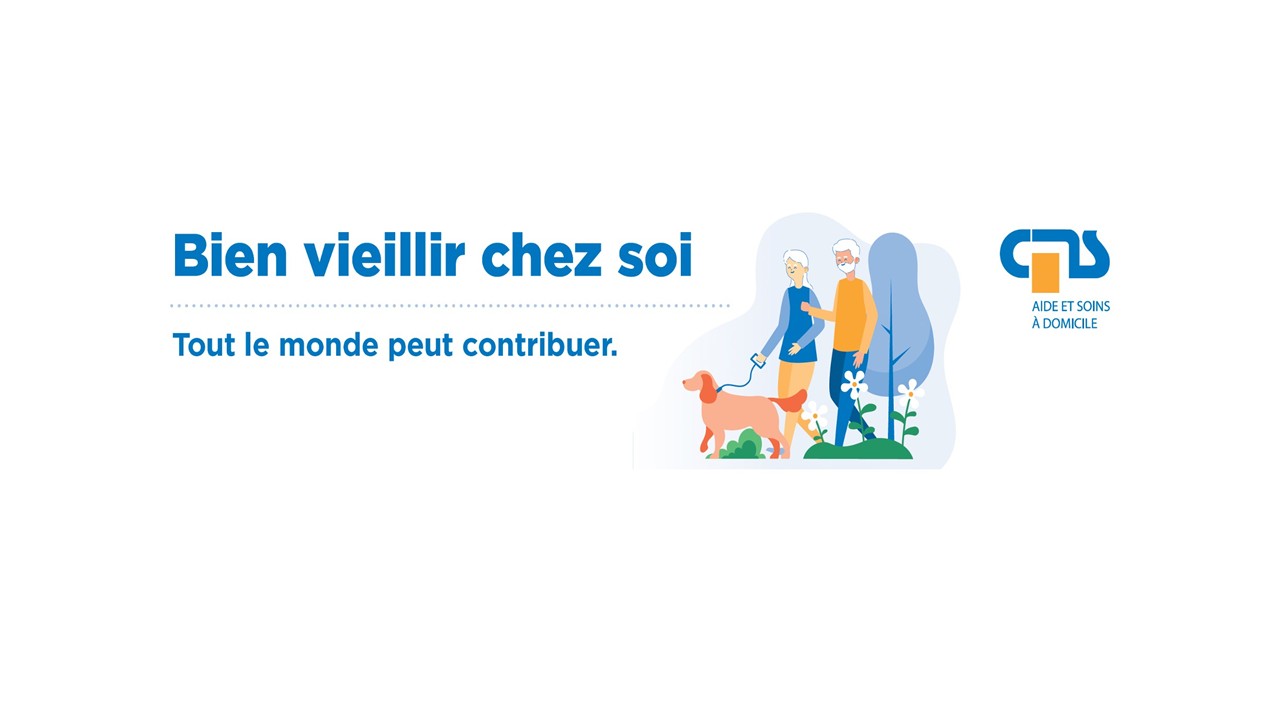
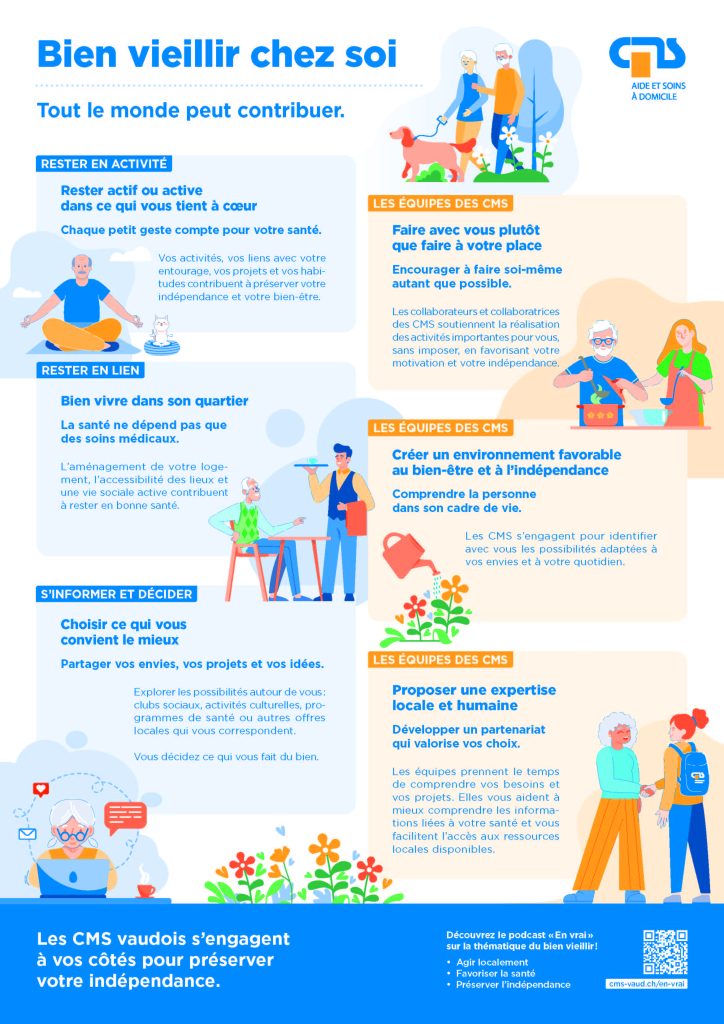
An infographic highlights the main elements that structure the ‘ageing well’ approach and the roles of each individual in this collective dynamic.

A structuring initiative for health promotion

This approach illustrates the key role of a semi-public institution such as AVASAD in implementing prevention and health promotion policies. It shows how training, research and public participation can bring about lasting change in professional practices and the conditions for ageing well at home.

The UNESCO Chair Global Health & Education, a scientific partner in this initiative since its launch, is proud to support AVASAD in the development, implementation and evaluation of this exemplary experiment in the service of healthy ageing in Switzerland.

Read the press release

Posted by Didier in News
Special issue: Child and Adolescent Health in Europe and Central Asia

Special issue: Child and Adolescent Health in Europe and Central Asia

A special scientific issue by Public Health in Practice, available on ScienceDirect, brings together key articles that support the new Child and Adolescent Health (CAH) strategy in the WHO European Region by providing analysis, evidence and concrete recommendations for its implementation. The recently adopted strategy ‘A healthy start for a healthy life: a strategy for child and adolescent health and well-being in the WHO European Region 2026–2030’ is the result of extensive consultation with governments, experts, civil society and young people themselves. 

The UNESCO Chair Global Health & Education actively contributed to providing the evidence base for the CAH strategy through the article ‘School is more than a place to learn: An intersectoral assessment of adolescent well-being prior to and after the COVID-19 pandemic in the WHO European Region[1], which sheds light on the challenges of adolescent well-being, the impact of the pandemic and the importance of an intersectoral approach to schooling.

Other articles included in the special issue are:


[1] M. Limburg, M. Cronin, M. Black, J.C. Inchley, D. Jourdan, C. Jung-Sievers, P. McHale, E. Rehfuess, M.-C. Tsai, N.J. Gray. School is more than a place to learn: An intersectoral assessment of adolescent well-being prior to and after the COVID-19 pandemic in the WHO European Region. Public Health in Practice, Volume 10, 2025, 100654. ISSN 2666-5352. https://doi.org/10.1016/j.puhip.2025.100654

Posted by Didier in News
Governments across Europe and Central Asia adopt new WHO strategy to give every child a healthy start in life

Governments across Europe and Central Asia adopt new WHO strategy to give every child a healthy start in life

Source: WHO

All 53 Member States of the WHO European Region have unanimously adopted a bold new strategy to improve the health and well-being of children and adolescents across Europe and Central Asia.

Titled A healthy start for a healthy life: a strategy for child and adolescent health and well-being in the WHO European Region 2026–2030”, and developed jointly with the United Nations Children’s Fund (UNICEF), the framework sets a clear vision for a region where every child and adolescent can grow, learn and thrive in good health – physically, mentally and socially.

Adopted at the 75th session of the WHO Regional Committee for Europe in Copenhagen, the strategy is the result of extensive consultation with governments, experts, civil society and young people themselves. It aims to tackle long-standing inequities in child and adolescent health and to respond to new challenges – from mental health and digital risks to the impacts of poverty, climate change and conflict on young lives.

The new strategy calls on countries to strengthen health systems and social policies that support children and families from the very beginning. It also emphasizes the importance of protecting children from harm, including exposure to violence, commercial exploitation, unhealthy products and the potential negative effects of social media. The strategy urges countries to act decisively on several fronts:

  • Participation and empowerment
  • Health equity and inclusion
  • Mental health
  • Health promoting schools
  • Safe and supportive environments
  • Digital well-being

As a WHO Collaborating Center for Reseach in Education and Health the Chair has provided input for the new strategy as well as the underlying evidence.

More information on the WHO website

Posted by Didier in News