Month: October 2025

“No progress on social inequalities in health over last decade”, says new data

“No progress on social inequalities in health over last decade”, says new data

Source: EuroHealthNet

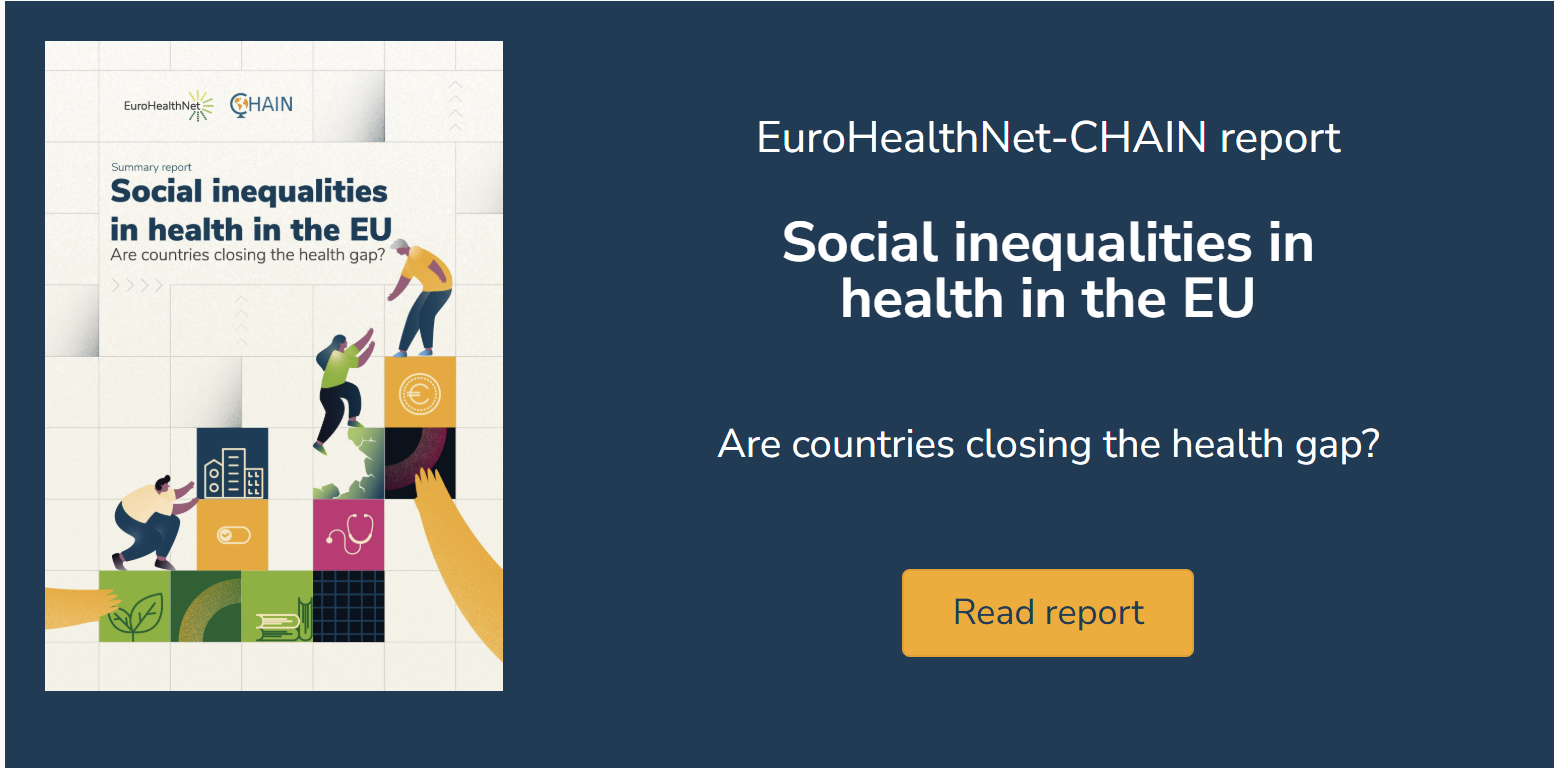
EuroHealthNet-CHAIN report maps 2014-2024 trends in health, mental health and inequalities in Europe, spurring action on root causes.

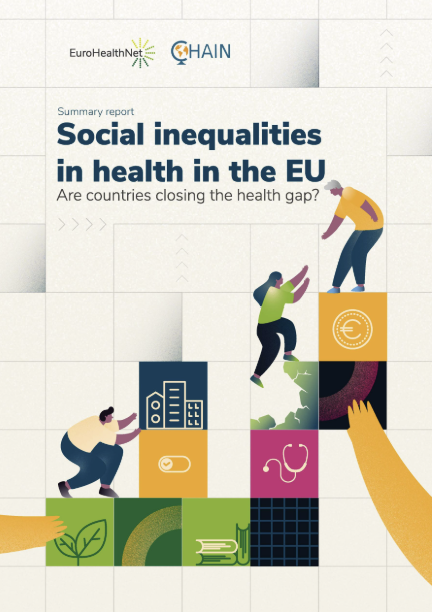
Europeans are living longer than ever, but these gains are not shared equally. Social inequalities in health and mental health persist across Europe, with people with lower education or occupation reporting poorer health. This undermines Europe’s prosperity and threatens its competitiveness and security, as outlined in the EU political guidelines. This is the main conclusion of the new EuroHealthNet and Centre for Health Equity Analytics (CHAIN) report, ‘Social inequalities in health in the EU’.

Using data from the European Social Survey, the report presents trends of social inequalities in health across Europe over the past ten years, highlighting their root causes.

Are countries closing the health gap?

  • One in three people reported their health as less than good.
  • People with low education are twice as likely to report poor health as those with high education
  • Health outcomes are becoming more similar across European countries, but this is a result of countries ‘meeting in the middle’ rather than all countries improving.
  • In those countries where inequalities have declined, this seems to reflect worsening health or mental health in higher social groups.
  • Only one country (Slovenia) showed progress towards both improving health across all groups and closing gaps in health and mental health.
What drives health inequalities?

Health is not just the result of genetics, healthcare, or our behaviours. It is particularly driven by social disadvantages. The study finds that economic insecurity, limited control over one’s life and job are strongly associated with poor health. Other relevant factors include overweight and obesity, smoking, as well as experiencing financial difficulties in childhood. Problems with housing, which have been increasing in Northern and Western Europe, also contribute to poor health.

Addressing the root causes  

Health and its distribution are not only affected by public health policy. Social, employment, and economic policies play a considerable role. Reducing inequalities requires addressing their root causes and integrating a focus on health equity in all these areas.

Upcoming opportunities include the EU Cardiovascular Health Plan, the EU Anti-Poverty Strategy, the European Affordable Housing Plan, and the next EU long-term budget.

Posted by Didier in News
Schools4Health Policy Brief Published: Creating Green and Healthy Schools for a Sustainable Future

Schools4Health Policy Brief Published: Creating Green and Healthy Schools for a Sustainable Future

Source: Schools4Health

How can schools respond to the challenges of climate change, declining child wellbeing, and growing inequalities? The Schools4Health project argues that the answer lies in bringing health promotion and sustainability together under one whole-school approach.

Across Europe, nine in ten young people believe that tackling climate change will improve their wellbeing. Their voices remind us that health and sustainability are deeply connected — and that schools are uniquely placed to link these agendas.

While many schools already run health or environmental projects, they are often treated as separate initiatives. This fragmented approach risks missing opportunities to create a stronger, collective impact. The new Schools4Health Policy Brief Creating green and healthy schools for a sustainable future explores how schools can align these efforts, and how the Health Promoting Schools (HPS) framework can provide the foundation for this integration.

What does this mean in practice?

  • School gardens, green play areas, and outdoor learning that support both physical activity and environmental awareness.
  • Healthy eating programmes that also reduce food waste and promote sustainable choices.
  • Whole-school strategies that embed both wellbeing and sustainability into curricula, policies, and partnerships.
  • Student-led initiatives that empower young people to take action for their own health and the planet.

Lessons from Europe

The brief showcases examples of how countries are already moving in this direction:

  • Finland integrates wellbeing and sustainability as cross-cutting themes in its National Core Curriculum.
  • Italy has legislated for climate and sustainability education across all school levels.
  • The Netherlands is expanding its Healthy School Programme to cover environmental and sustainability issues.
  • Greece supports teachers with sustainability coordinators at district level.
  • Hungary promotes environmental awareness from an early age through its Green Kindergarten Network.

Why Schools4Health?

Schools4Health is an EU-funded project bringing together partners from 11 countries to strengthen the Health Promoting Schools approach across Europe. By supporting local pilots, cross-country exchanges, and policy work, the project shows how schools can be catalysts for healthier, fairer, and more sustainable societies.

Our third policy brief, Creating green and healthy schools for a sustainable future, sets out recommendations for policymakers, educators, and communities — from embedding health and sustainability in curricula to building cross-sector structures and empowering students as agents of change.

Read the full brief here.

Access the second brief here: Health Promoting Schools as a Lever for Equity in Education  and the first one at: Why Invest in Health Promoting Schools.

Find out more at www.schools4health.eu

Posted by Didier in News
International Round Table Explores Global Perspectives on Good Healthy Schools

International Round Table Explores Global Perspectives on Good Healthy Schools

On 9 April 2025, the Good Healthy Schools Initiative (GHSI) convened its first international Round Table, bringing together experts from across Europe, Africa, Asia, and North America to discuss how health can be systematically embedded into education systems. The online event, organized by Leuphana University of Lüneburg and funded by the German Social Accident Insurance (DGUV), marked a pivotal step in the Initiative’s ambition to promote “Good Healthy Schools” through international dialogue and cooperation.

Linking education and health

Moderated by Goof Buijs, manager of the UNESCO Chair Global Health & Education, the Round Table opened with a keynote by Prof. Dr. Peter Paulus, Director of the Center for Applied Health Sciences at Leuphana University and Head of the GHSI project. Paulus outlined the German model of the Good Healthy School and highlighted the strategic importance of linking education and health as mutually reinforcing dimensions of school development. His remarks set the stage for the international perspectives that followed.

Contributions came from representatives in Botswana, Hong Kong, Spain, Switzerland, Austria, Germany, and the United States, as well as from UNESCO’s Sections of Education Policy and Health and Education. The presentations highlighted innovative strategies ranging from UNESCO’s Happy Schools framework and the Icelandic Prevention Model to regional school health programs in Andalusia and cross-sectoral partnerships in Africa.

Health as a core dimension of educational quality

A recurring theme throughout the Round Table was the need to move beyond isolated initiatives and instead pursue systemic, policy-anchored approaches that view health as a core dimension of educational quality. Participants emphasized that sustainable progress requires intersectoral collaboration, cultural sensitivity, and above all, meaningful participation of children and young people. As Buijs stressed: “Don’t talk about them – talk with them.”

Breakout sessions provided space for in-depth dialogue on embedding health into school quality frameworks, financing strategies, and innovative partnerships. Across all contexts, participants highlighted funding challenges but also underlined the opportunities of global networks such as UNESCO, European Network Education and Training in Occupational Safety and Health (ENETOSH), and World Health Organisation (WHO) in creating shared platforms for learning and advocacy.

Call for international collaboration

The event concluded with a clear call for stronger international collaboration and the development of long-term alliances.

Feedback from participants confirmed the event’s value as a unique forum for exchange and co-creation. Preparations are already underway for a second international Round Table in December 2025, with even broader participation from UNESCO partners and organizations such as WHO, European Trade Union Committee for Education (ETUCE), and European Federation of Education Employers (EFEE).

The Round Table demonstrated the growing momentum of the Good Healthy Schools Initiative and reaffirmed the global relevance of embedding health and well-being at the heart of education systems.

Posted by Didier in News