Month: September 2025

Research shows multiple impacts of COVID-19 school closures on adolescents

Research shows multiple impacts of COVID-19 school closures on adolescents

Source: University of Huddersfield

Research into the multiple impacts of COVID-19 school closures on adolescent well-being has been published in a key journal. The international study was led by the UNESCO Chair Global Health & Education. Co-chair holder and University of Huddersfield academic, Dr Nicola Gray, who is renowned for her work on adolescent health, is the lead author of the study now published in the Journal of Adolescent Health.

Entitled Multiple Impacts on Adolescent Well-Being During COVID-19 School Closures: Insights From Professionals for Future Policy Using a Conceptual Framework, the research included notable academics in the field of adolescent health, including UNESCO Chair Global Health & Education co-chair holder Professor Didier Jourdan.

A consortium of partners composed of various research teams had input into the survey with data drawn from 60 interviews conducted in six languages with education and health professionals across 28 countries during the second wave of the COVID-19 pandemic amid school closures and re-openings in 2021.

Multiple impacts found

It found multiple, intersecting impacts of the pandemic on adolescent well-being and the potential for widening inequalities, making a case for caution regarding school closures in future health crises.

School closures were found to have impacted all five UN H6+ domains of adolescent well-being, which comprise good health and nutrition; connectedness; safety; learning; and agency/resilience.

The professionals reported that closures also widened inequalities for certain groups of students, disproportionately impacting the most vulnerable.

The study concluded that education policies need to see schools as infrastructure that supports multiple aspects of adolescent well-being, not just as a teaching-learning system.

In addition, the authors asserted that during recovery from a pandemic, holistic strategies related to adolescent well-being, not just a focus on educational catch-up, are needed to mitigate the long-term consequences of any closures.

More than a place to learn

Dr Gray, Reader in Medicines and Health at the University of Huddersfield, commented:

“Schools are more than a place to learn. They provide welfare and connection for many students, as well as the means to a bright future. Policymakers must recognise multiple impacts of school closures on adolescent well-being and the potential for widening inequalities. The decision to close schools in any future crisis must be balanced against the damage it could do to young lives.”

On the back of the study, Dr Gray was asked by the World Health Organisation Regional Office for Europe to develop a factsheet detailing the impact of COVID-19 on education in the region, which she presented in June at a WHO/UNICEF webinar.

Dr Gray is also working on another paper on the same topic, to be published in a special issue of Public Health in Practice in the autumn. The paper was facilitated by WHO/Europe to support the development of a new WHO/UNICEF strategy on child and adolescent well-being for Europe and Central Asia. She will speak about this research at a webinar hosted by The Royal Society for Public Health on 22 October. The webinar is titled School is more than a place to learn: An intersectoral assessment of adolescent well-being prior to and after the COVID-19 pandemic in the WHO European Region.
Posted by Didier in News
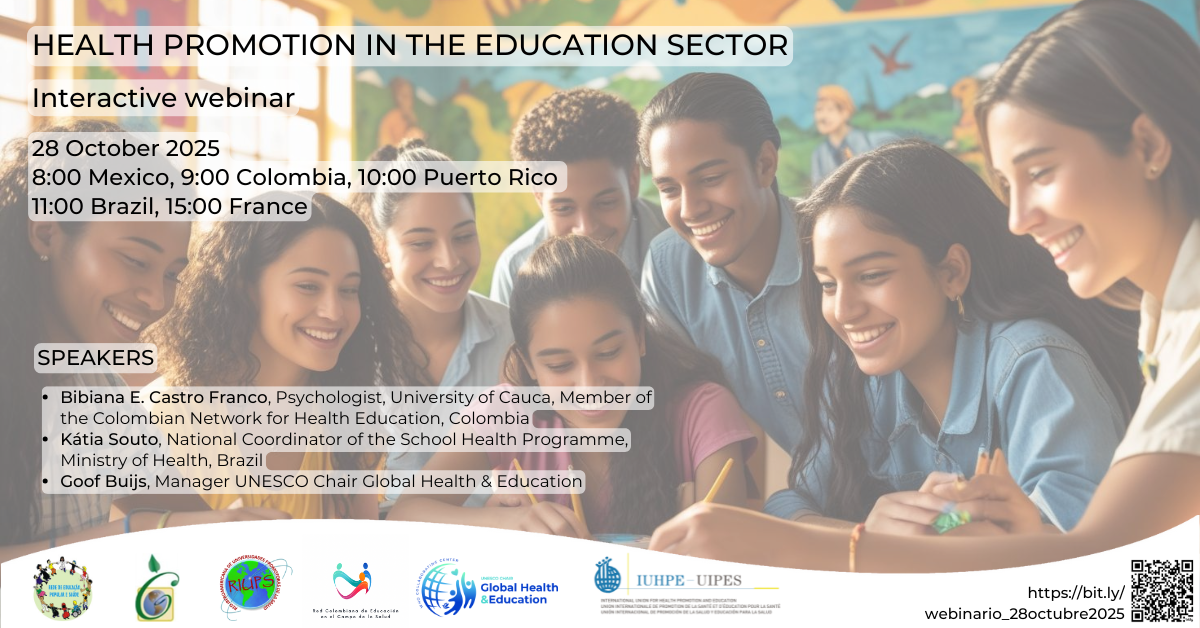
Webinar 28 October 2025 – Health promotion in the education sector

Webinar 28 October 2025 – Health promotion in the education sector

Time: 8.00 – 9.30 Mexico, 9.00 – 10.30 Colombia, 10.00 – 11.30 Puerto Rico, 11.00 – 12.30 Brazil, 15.00 – 16.30 France

Language: The webinar will be held in Spanish and Portuguese. Translation will be available in 50+ languages, including English, French, Portuguese and Spanish. We will use a translation app based on AI.

RegistrationRegister here. Registration is free. The link to the webinar will be sent to you after registration.

Información en español, Informações em português


Speakers

Moderator

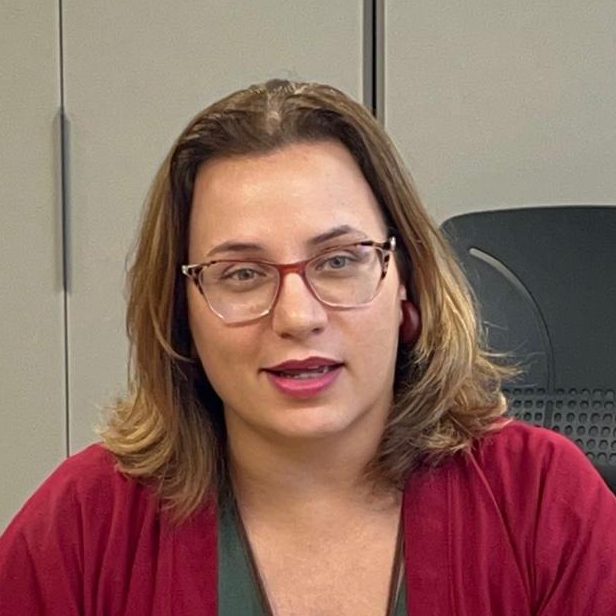
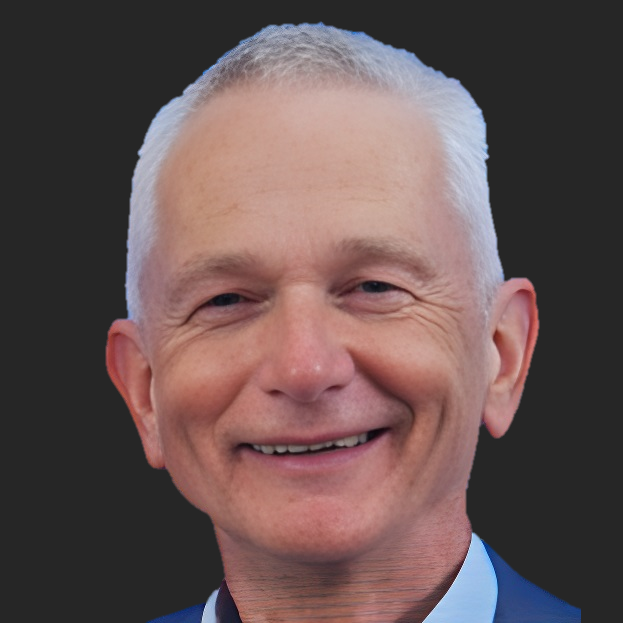
Prof. Dr. Fernando Peñaranda Correa. He is a doctor, holds a master’s degree in public health, a master’s degree in education and social development, and a doctorate in social sciences, childhood and youth. He is a full professor and senior researcher in the Health and Society Research Group at the National School of Public Health at the University of Antioquia. He is the coordinator of the health education emphasis in the Master’s in Public Health programme. He has taught undergraduate and postgraduate programmes at the Faculty and other universities in the country on the following topics: epistemology, qualitative research, ethics and social justice, public health, health promotion, and health education. He has written numerous articles, book chapters, and books in the areas of health education, qualitative research, ethics, public health, and social justice.

Bibiana E. Castro Franco. Psychologist, specialising in social psychology, Master’s degree in Public Health and Doctorate in Human Sciences. Lecturer at the University of Cauca. Department of Education and Pedagogy. Researcher with the Popular and Community Education Group. Member of the Colombian Network for Health Education. CLACSO Working Group on International Health and Health Sovereignty.

Kátia Souto, National Coordinator of the School Health Programme, Ministry of Health, Brazil

Goof Buijs. Manager of the UNESCO Chair Global Health & Education. After finishing his Master study in Human Nutrition his first job was teaching health science at the Amsterdam teacher trainer institute. Next he moved into the field of health promotion, as health promotion officer in Amsterdam. At the Netherlands Institute for Health Promotion NIGZ he specialized in school health promotion, first on the Dutch level to introduce the national health promoting school programme and leading several European projects. In 2007 he became the manager of the Schools for Health (SHE) network until 2017. In 2018, with prof Didier Jourdan, he set up the UNESCO Chair Global Health & Education, also the WHO Collaborating Centre. His specialisation is bringing health and education sectors together. He is an experienced networker, expert in co-creation, trainer, and organizer of local and global events. He supports cooperation among people, focusing on everyone’s talents and uniqueness. He is an environmental activist for most of his life.


Summary

During this webinar the speakers will analyse experiences with health promotion in the education sector in various countries to identify achievements, challenges and opportunities. Each speaker will share their respective experiences, identifying the progress, strengths, difficulties and challenges involved in coordinating the education and health sectors to promote health promotion and health education in schools. This will be followed by time for attendees to ask questions and make comments on the presentations given by the speakers.


Latin American Network for the Revitalisation of Health Education

This webinar is a part of the “Latin American Network for the Revitalisation of Health Education”. This initiative is being promoted with the participation of the UNESCO Chair on Global Health and Education, the Inter-American Consortium of Universities and Training Centers for Health Education and Health Promotion (CIUEPS), the Brazilian Network of Popular Health Education, the Colombian Network of Health Education and the Regional Office for Latin America of the International Union of Health Promotion and Education (IUHPE/ORLA), with the following objectives:

  • Promote health education at national and international levels, as a fundamental dimension of the health disciplines, the educational sciences and the social and human sciences.
  • To recuperate the Latin American production and position it in the regional level, which implies promoting its critical and decolonial approaches. A health education that advocates for social transformation towards a more just and equitable society that guarantees well-being and a life with dignity.
  • Promote the articulation of the education and health sectors to strengthen the actions of each of these sectors to promote health education, by recognizing education and health as two inalienable, synergistic and interdependent human rights.
  • Strengthen the theoretical, political and ethical foundations of health education as a requirement for a responsible, productive and ethical pedagogical practice.
  • To generate a setting for the articulation of academia and civil society that allows Latin American integration in order to share experiences, knowledge and aspirations framed in a collective purpose.
  • To promote national and international integration with respect to health education as a means for mutual learning and solidarity, and to facilitate cooperative actions in the development of academic-scientific events, research and training processes.

The webinars, open to all interested stakeholders, are a component of the program. They are experiential sessions, lasting 60-90 minutes, with guest speakers who present their reflections on two or three problematic questions to encourage audience participation. Five webinars have been scheduled for this first stage of the program, with an interval of 2 months between each one.

Watch the recordings of previous webinars:

Posted by Didier in News
News from IUHPE

News from IUHPE

The International Union for Health Promotion and Education (IUHPE) recently published their Flash-Info. The IUPHE is a worldwide, independent and professional association of individuals and organisations committed to improving the health and wellbeing of the people through education, community action and the development of healthy public policy. Their newsletter is relevant for all working in the field of health promotion and education. While the newsletter is typically a member benefit, it is shared here with IUHPE’s permission because it includes an important call to action for the health promotion community at large. The information is available in English, French and Spanish.

In the Flash-Info August 2025 you can read amongst others about the need for health promotion in our current world, read an account of the 26th IUHPE World Conference on Health Promotion, access the Global Health Promotion (GHP) call for papers on sustainable development goals (SDGs) and find a call to action to secure the position of health promotion within the World Health Organization (WHO).

Access the IUHPE Flash-Info August 2025

Posted by Didier in News
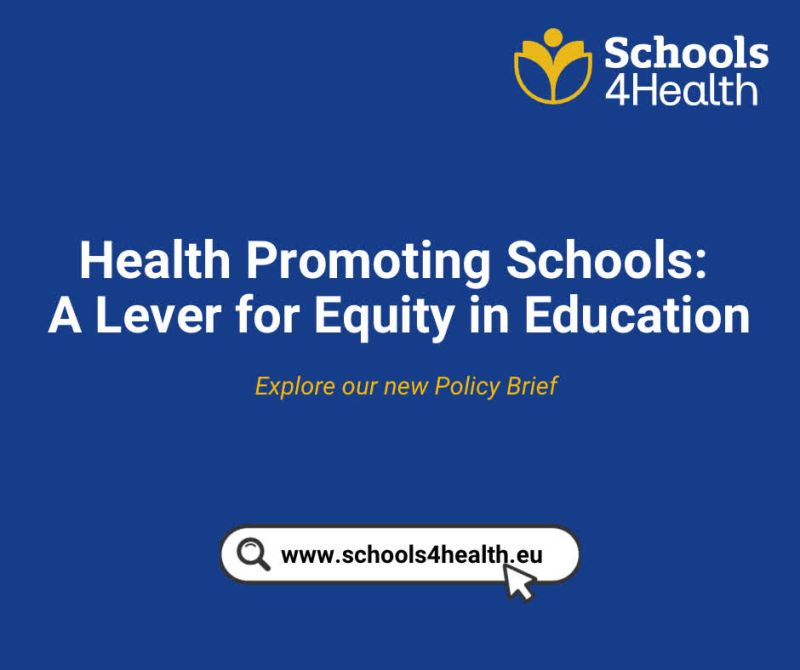
Schools4Health Policy Brief: Health Promoting Schools as a lever for equity in education

Schools4Health Policy Brief: Health Promoting Schools as a lever for equity in education

Source: Schools4Health

How can we reduce health and learning disparities that put millions of children and young people at a disadvantage? The answer may begin in schools—but not with schools alone. 

The latest policy brief from the Schools4Health project makes a strong case for why Health Promoting Schools (HPS) are a vital part of creating more equitable education systems. It highlights how embedding health, inclusion and wellbeing across school environments—not just within isolated lessons—can improve both student outcomes and overall school climates. 

A call for “proportionate universalism” 

The brief argues for a shift toward “proportionate universalism”: an approach that combines universal support for all schools with tailored resources for those with the highest need. Schools in underserved communities often face greater health and learning challenges, but they are also powerful agents of change—if given the tools and support. 

From practice to policy 

Drawing on examples from Finland, Scotland, Greece, Spain, and others, the policy brief illustrates how real-world implementation of the HPS approach can promote inclusion and equity. Whether through school-wide campaigns, social-emotional learning, healthier food environments or better coordination with local services, the impact is clear: when students feel safe, supported, and well, they’re better equipped to learn and succeed. 

What’s needed next? 

To unlock the full potential of the HPS model, the brief outlines a number of practical recommendations for governments, school leaders, and local authorities. These include: 

  • Investing in coordinated school health policies and local partnerships 
  • Integrating wellbeing into education and social policy 
  • Providing training and support for teachers 
  • Ensuring access to health-promoting activities for all students 

Explore the brief 

This is the second in a series of policy briefs from the Schools4Health project. It builds on the first brief, Why Invest in Health Promoting Schools, by delving deeper into how the HPS model supports equity as both a value and a practical pathway toward healthier education systems. 

Read the brief and learn how we can make every school a Health Promoting School.

Missed the first one? Why Invest in Health Promoting Schools 

For more information, visit www.schools4health.eu or reach out to us on LinkedIn.

The UNESCO Chair Global Health & Education is a partner in the Schools4Health project.

Posted by Didier in News
25-26 September 2025: Launch of the ‘Social inequalities in health in Europe’ report

25-26 September 2025: Launch of the ‘Social inequalities in health in Europe’ report

Source: EuroHealthNet

On Thursday 25 September and Friday 26 September, EuroHealthNet will launch its landmark report, Social Inequalities in Health in the EU. The report has been developed in collaboration with the Centre for Health Equity Analytics (CHAIN).

This trend study, based on data from the European Social Survey in 2014 and 2024, provides the most detailed picture to date of social inequalities in health across Europe over the past ten years. It shows health and mental health outcomes across groups with different levels of education and occupation, and how these outcomes have changed over the past 10 years. The report also presents examples of promising actions from across Europe and provides recommendations for EU and national policymakers.

The findings are a call to action. Rising living costs, climate change, employment insecurity, and environmental degradation are widening social inequalities in health and undermining physical and mental wellbeing. 

Addressing these determinants of health is essential for protecting Europe’s social model, ensuring health as a human right, as well as fostering healthier, more resilient, and more productive societies.

The report will be launched in two parts: a live-streamed, high-level debate in the European Parliament on 25 September from 13.00 – 15.00 CEST and a webinar on country-level data and measures on 26 September from 10.00 – 12.30 CEST.

Agenda and registration for the high-level debate in the European Parliament

Agenda and registration for the launch webinar

Posted by Didier in News